
Background
Phenomena
This competition began as a direct response to Phenomenon’s recent success. Because the 30lbers have recently shown good promise, I don’t want to drain funds too fast by fighting them again, but I do need to figure out ways to avoid the few consistent blind spots on the machines such as faceplanting as shown here:
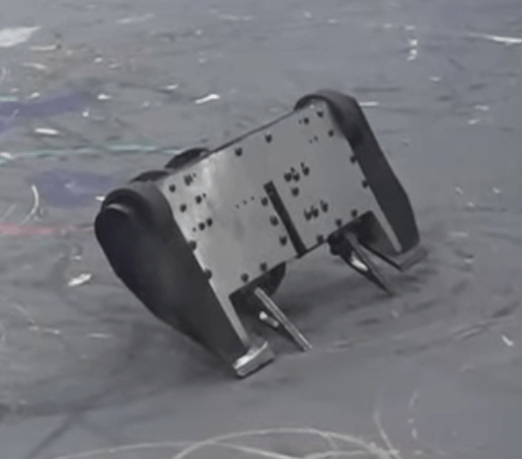
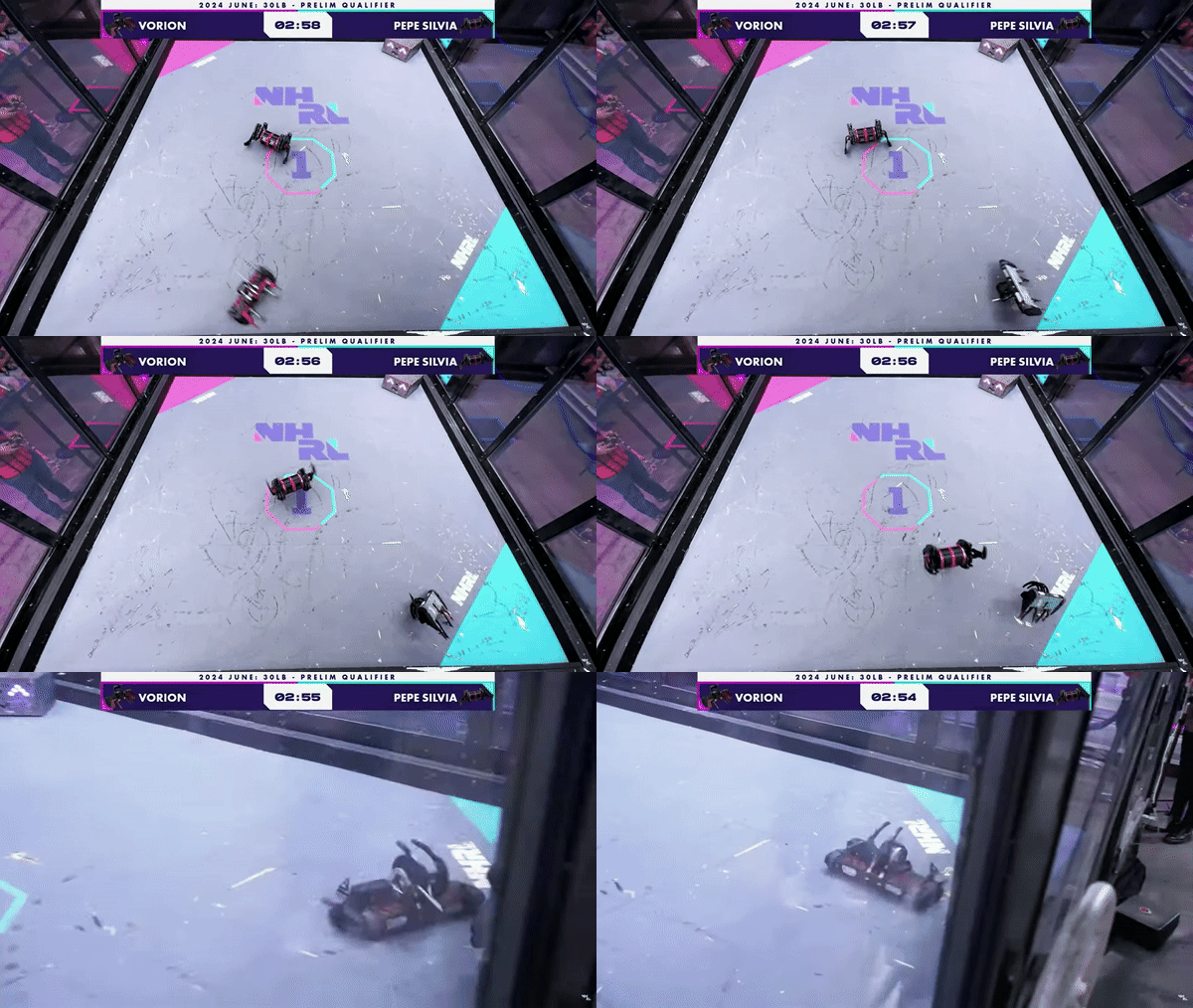
The self-righting hoops are good when used in ideal situation but are also really good at locking the robot onto its face if it lands forward. You can see this in action as Vorion fought against Pepe Silvia at the recent Teams event where, after being overly zealous, the bot comfortably landed on its face.
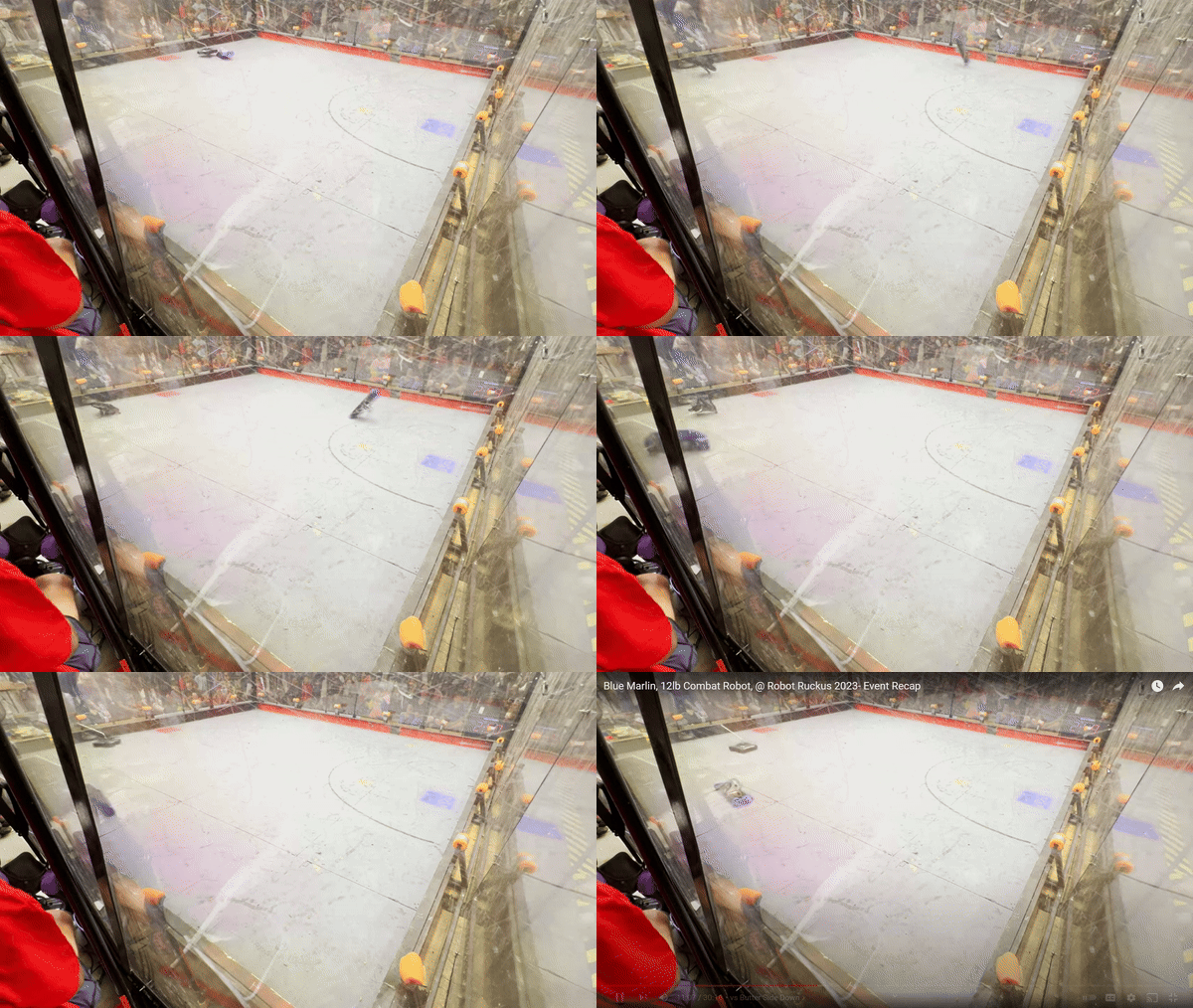
While the self-righter does help the machine reset from even the worst spots, it can’t be trusted against fast competitors like those at the top of the 30lb class. One of Phenomenon’s favorite descendants, Blue Marlin, foregoes the hoops entirely and uses the violence of it’s weapon to launch itself into self-righting which you can see below:
The two different styles have pros and cons, namely between the speed versus control, so I hoped for a more neutral balance of the two that wouldn’t stress the weapon system of the 30lbers but also doesn’t give a window of opportunity for it to be struck like in March. I will do a more thorough breakdown of the rationale on Phenomena’s proper page later, but ultimately this was the balance the machine reached.
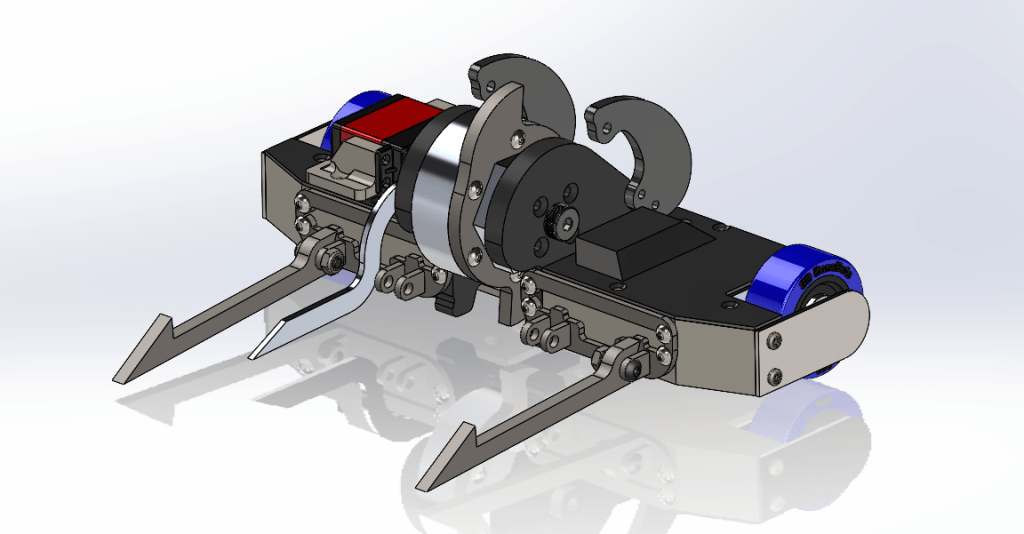
Beyond the ideas from the 30lber, there were some new ideas for 3lbers being implemented too. The chassis was going to try out some glass-filled Nylon for the main base, but utilize steel mounting for attachments. The 3mm AR500 is a bit overkill strength-wise, but because the long forks could get side-swiped, these were critical to ensure that ground game would always work which is essential for the small weapon. The robot also tried out a new hubmotor idea which continues this year’s trend of eradicating anything but the spinning bit. The lifter is also maintained to see how its function adds to the bots function beyond that of a normal spinner.
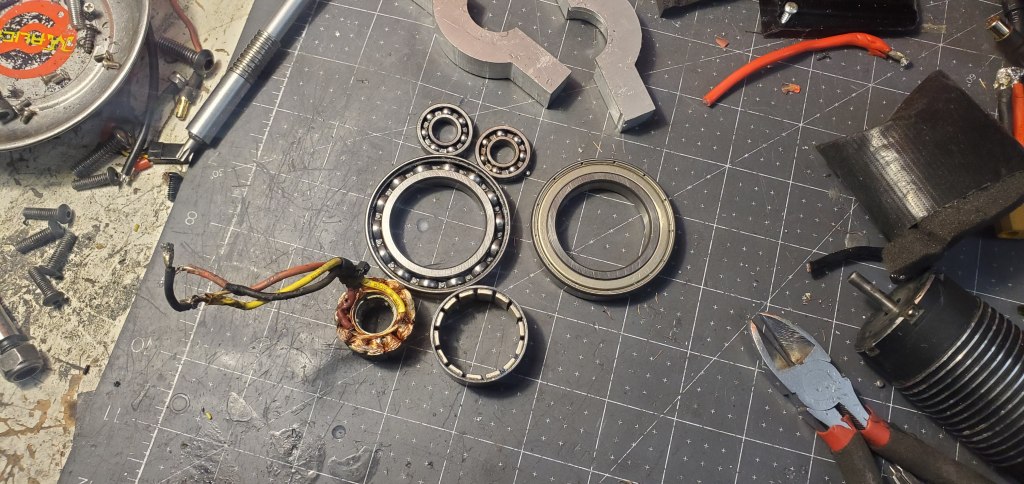
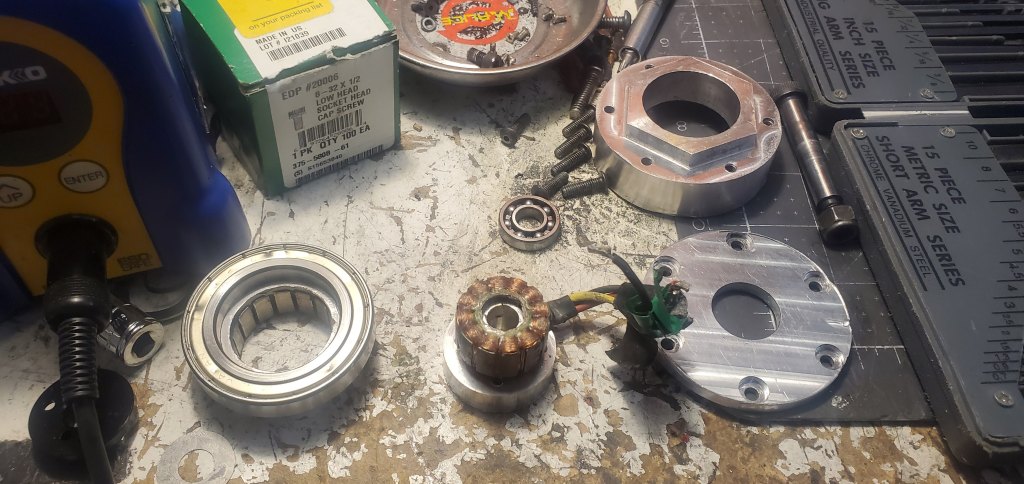
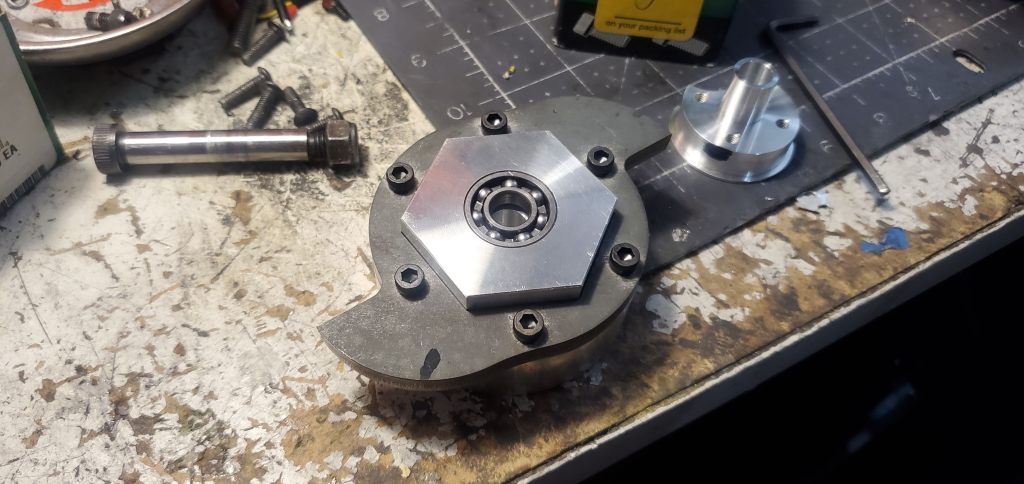

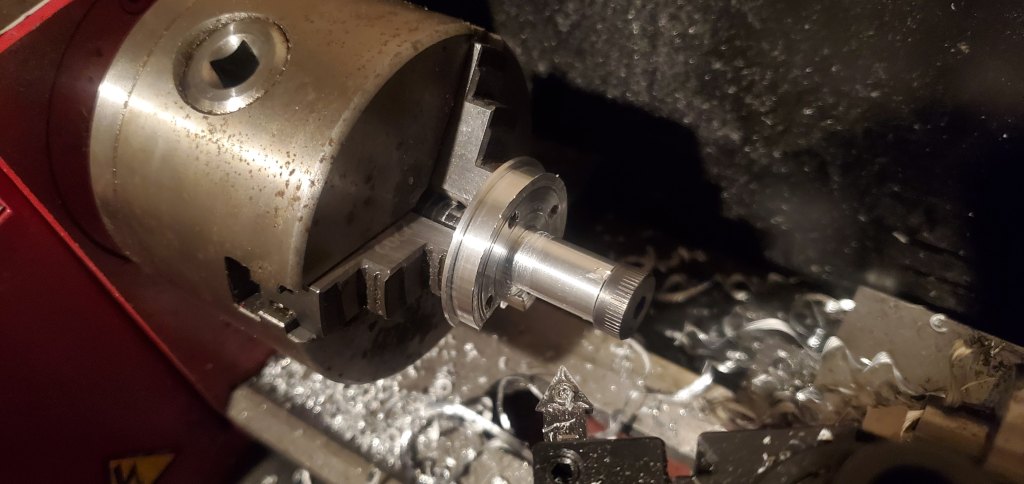
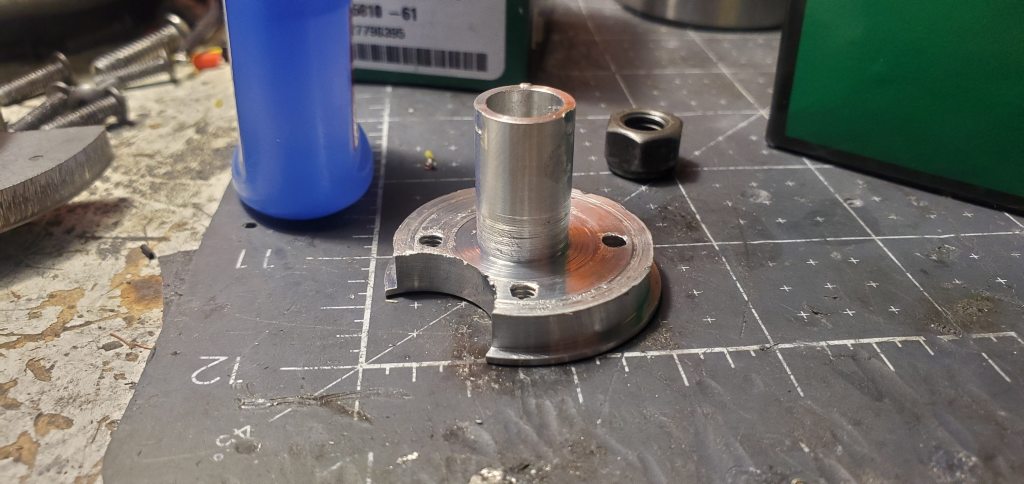
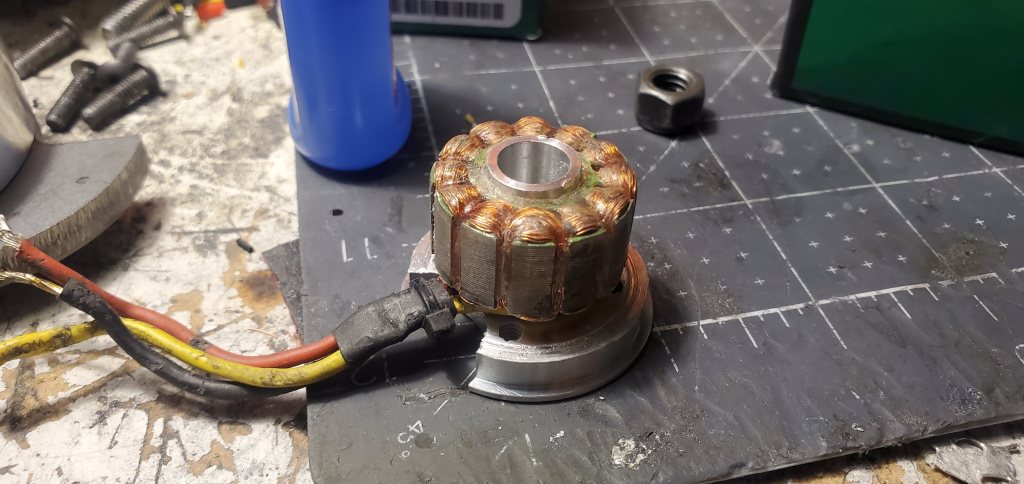
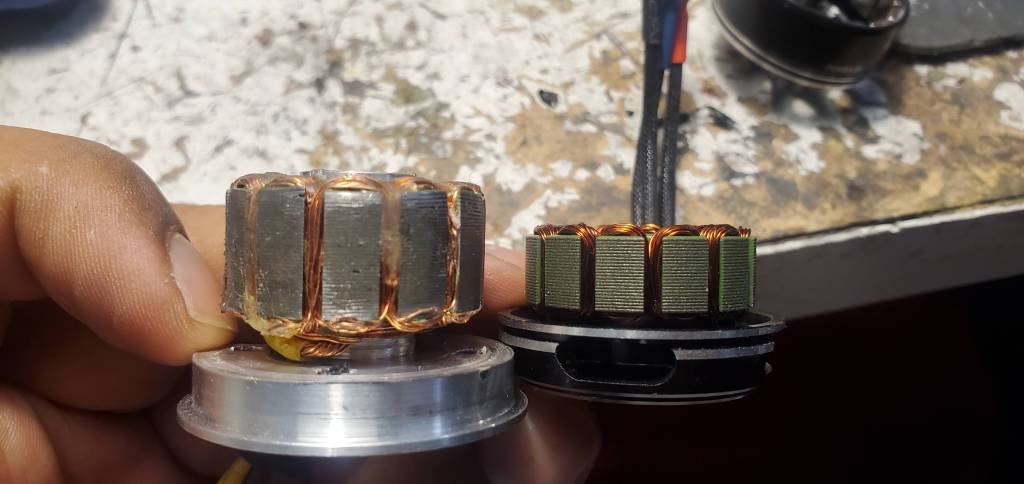
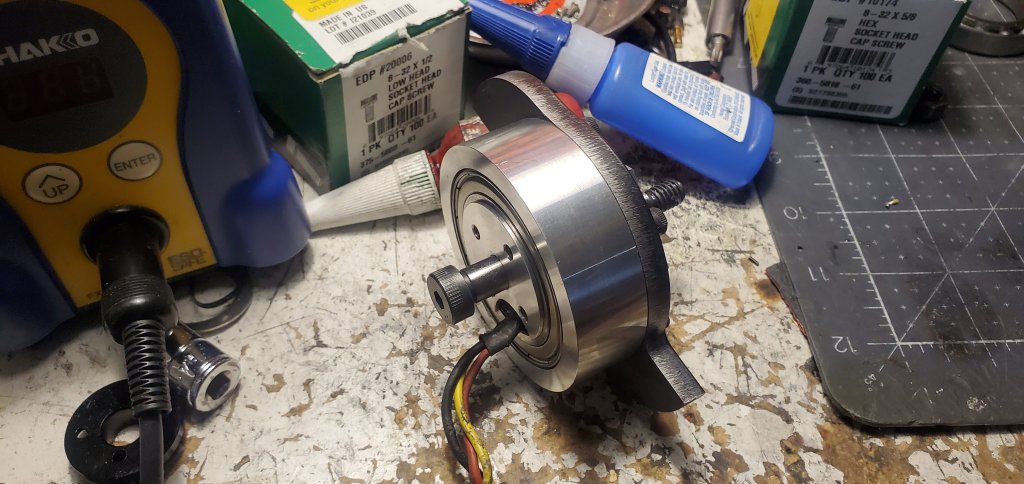
The hubmotor went together really well. Its two machined parts (stator mount and overall hub body) with the magnet ring, stator, and bearings dropping in. Unfortunately I forgot to leave room for wires so I had to use the mini lathe to thin the stator mount. Since there isn’t a good grab point, I used the center shaft and coated it in super glue as an arbor. It wasn’t pretty but the job was done and the hub went together. Deeper details on this design will be explored in Phenomena’s page later on.
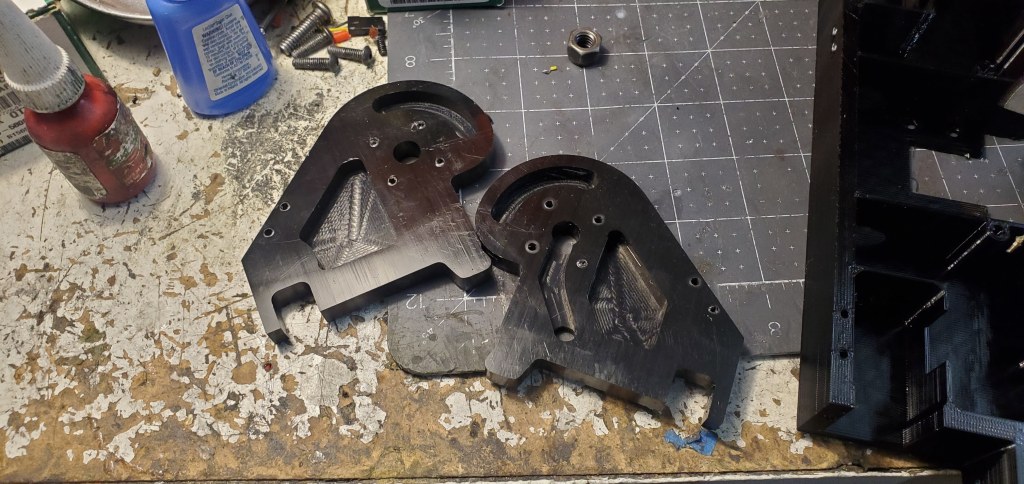
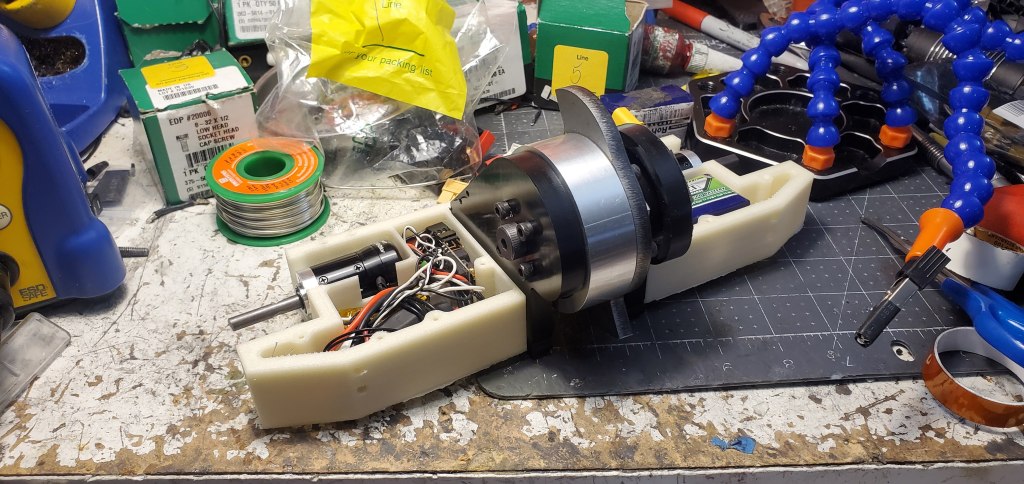

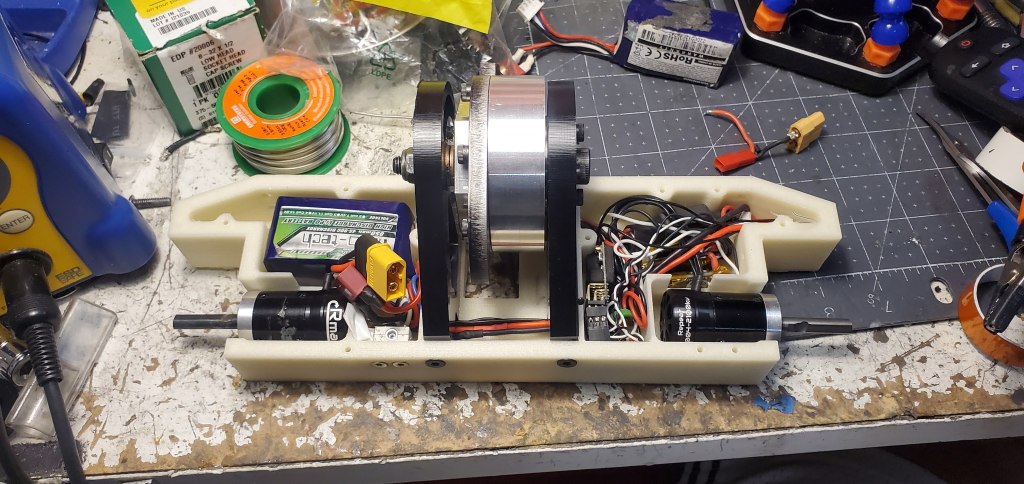
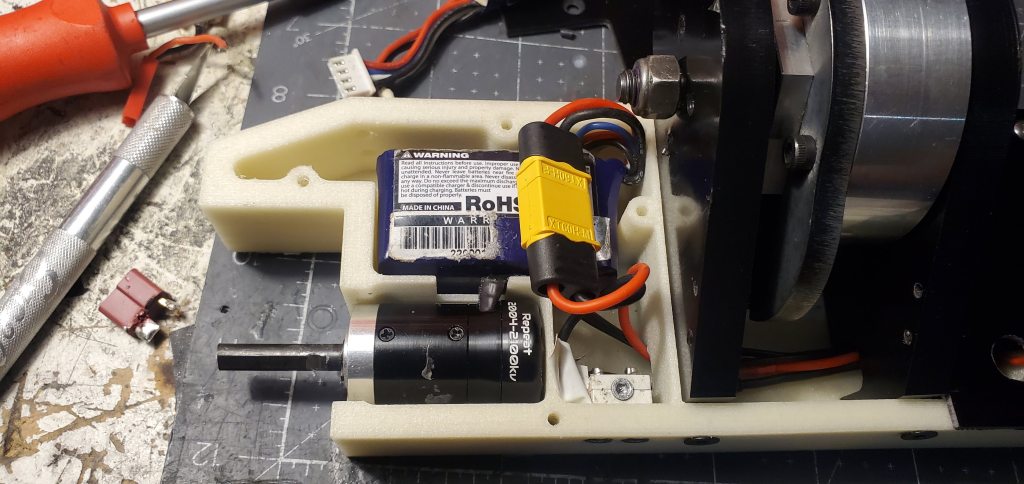
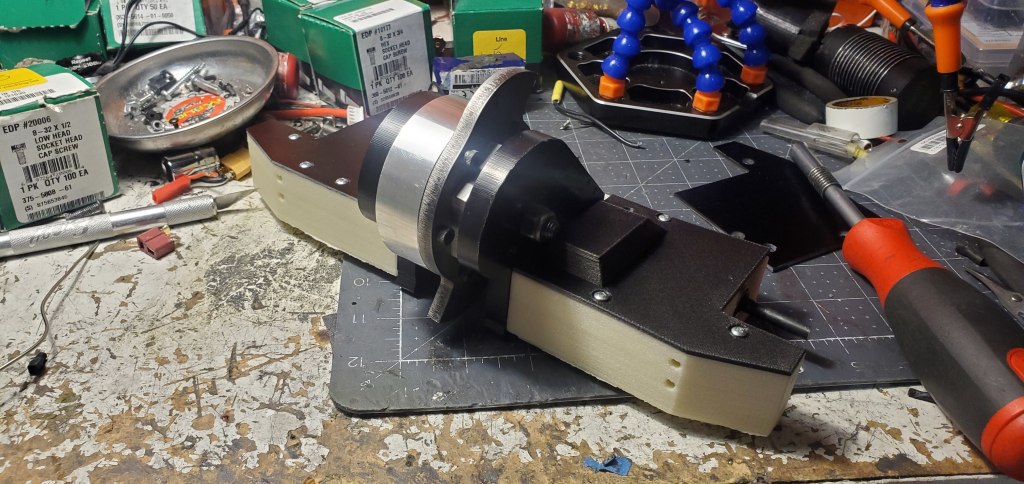
Later on the center frame rails were cut out on the CNC router and attached the newly printed chassis. After a little bit of grinding around the drive motors, the parts fitted very nicely for a tight fit. The last business was the XT60 connector used for the main power. Once again, no space was left for them inside the main chassis volume, so instead they were included in the top plate! Through the use of 3D printing a new top plate was formed with an extra pocket for the plugs to live in.
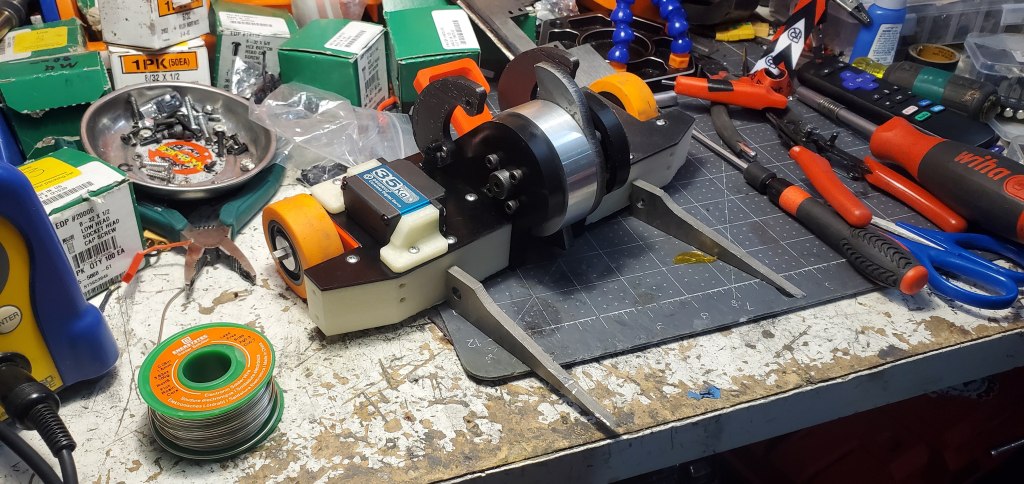
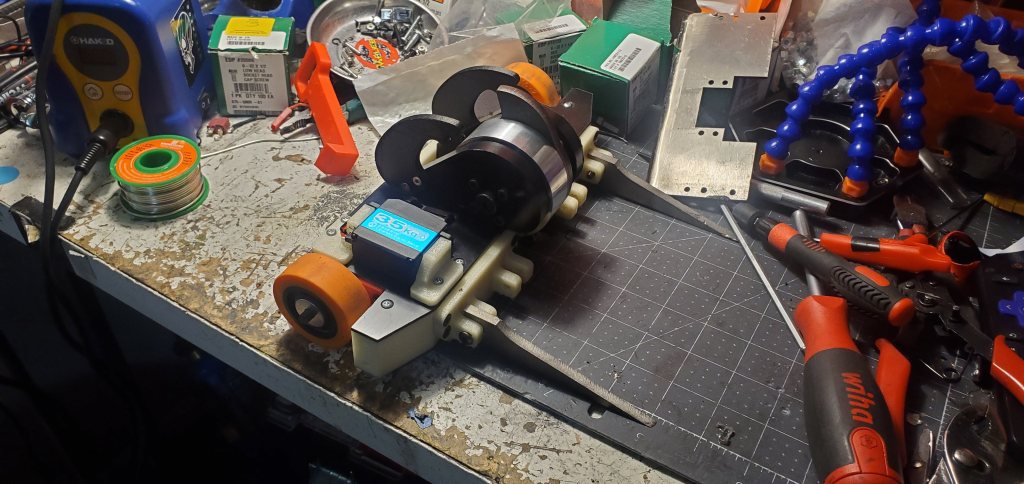
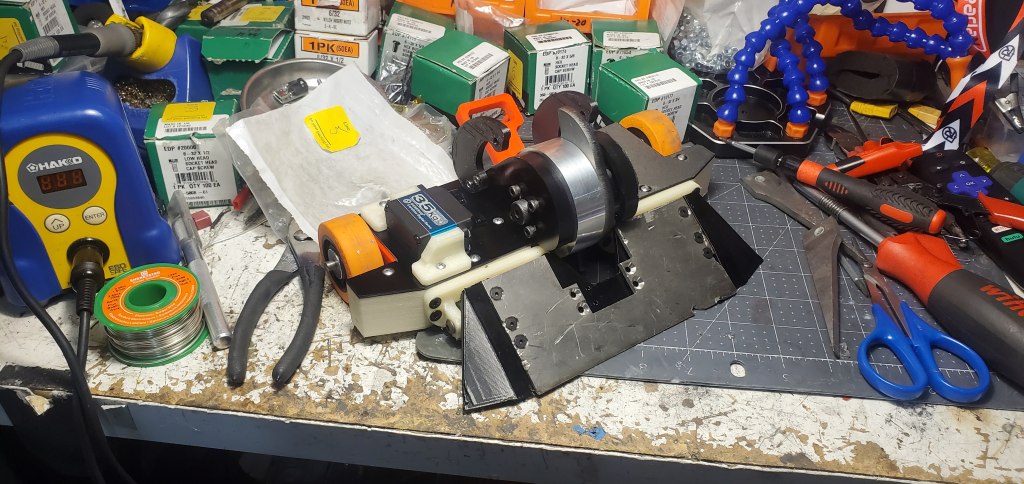
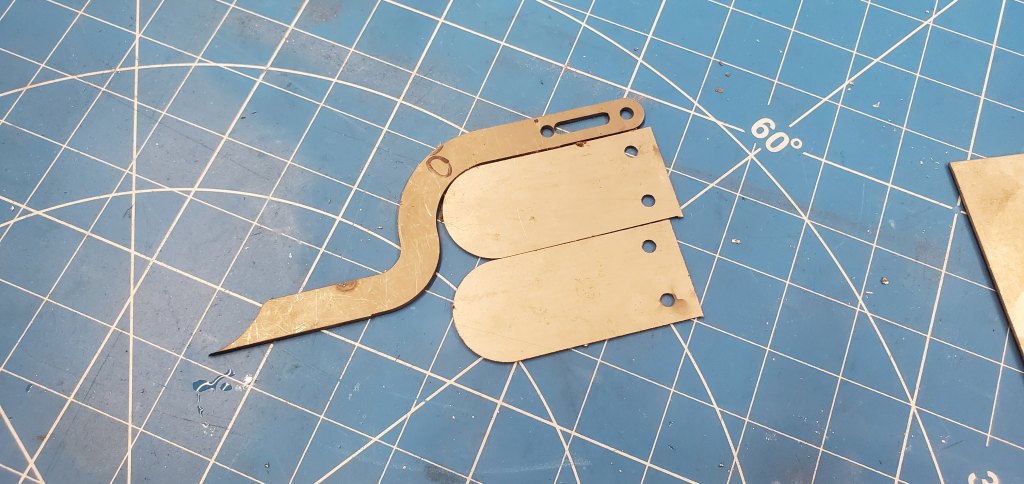
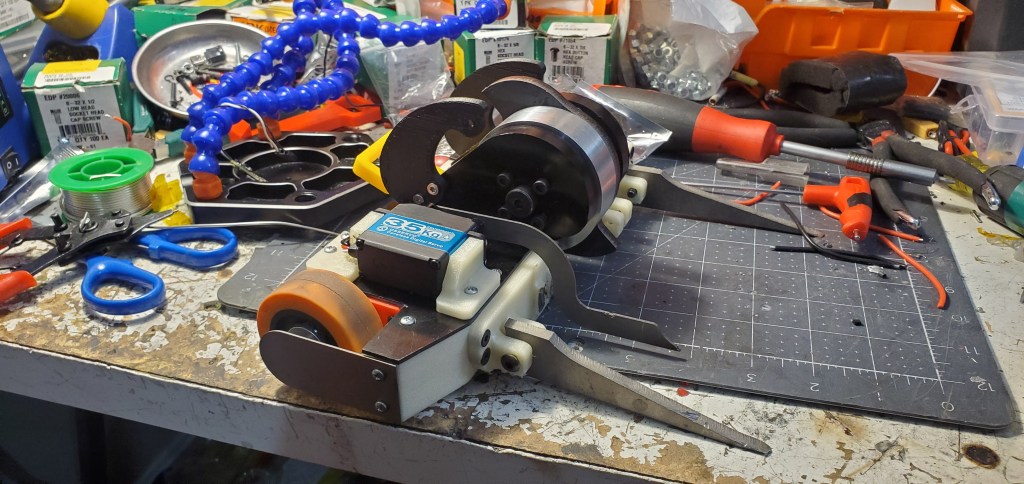
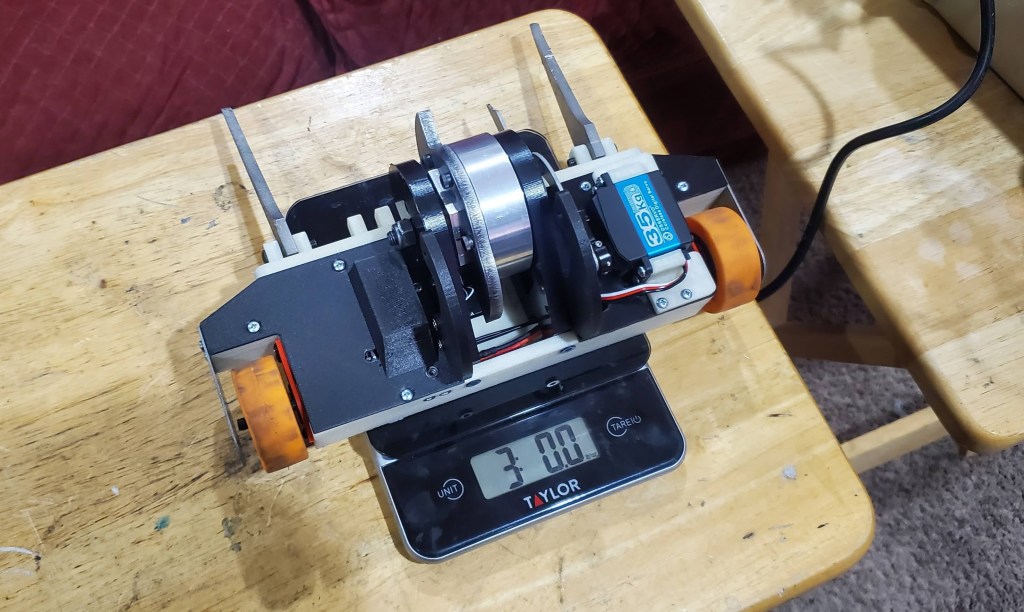
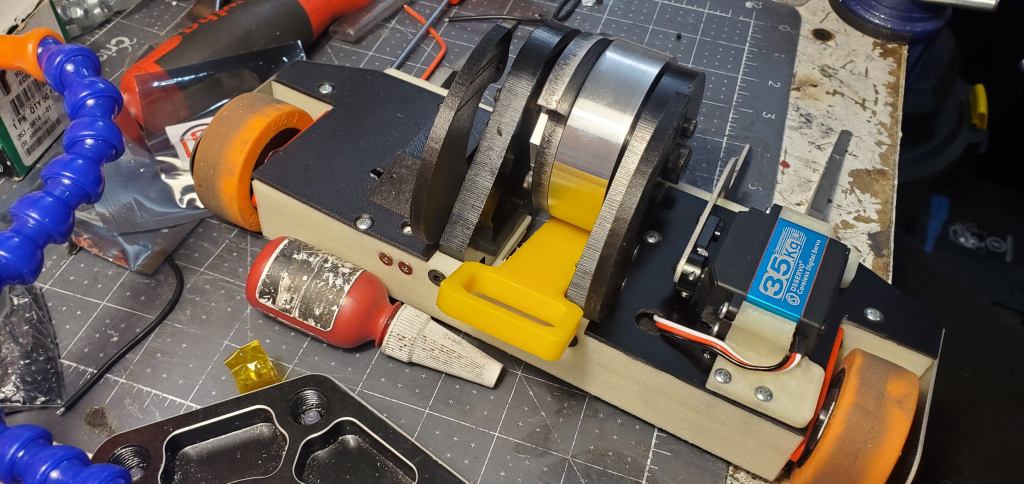
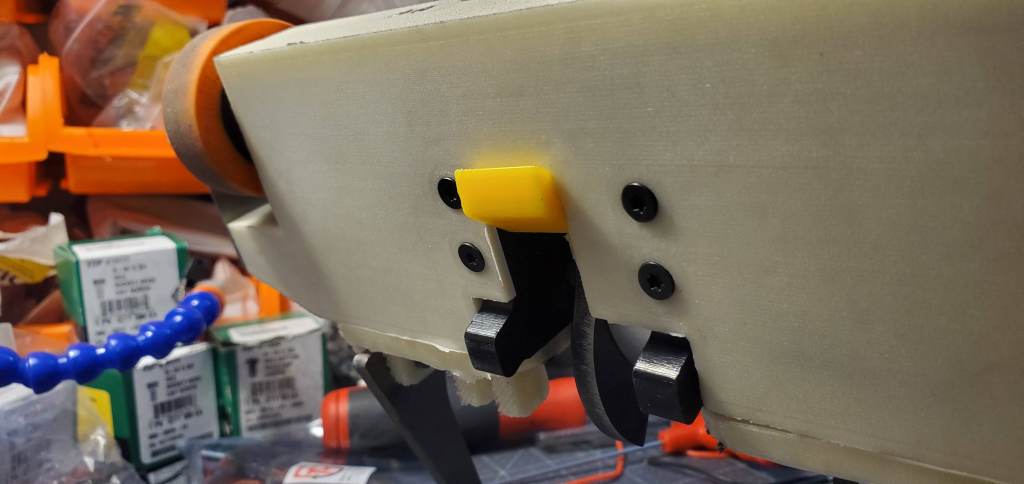
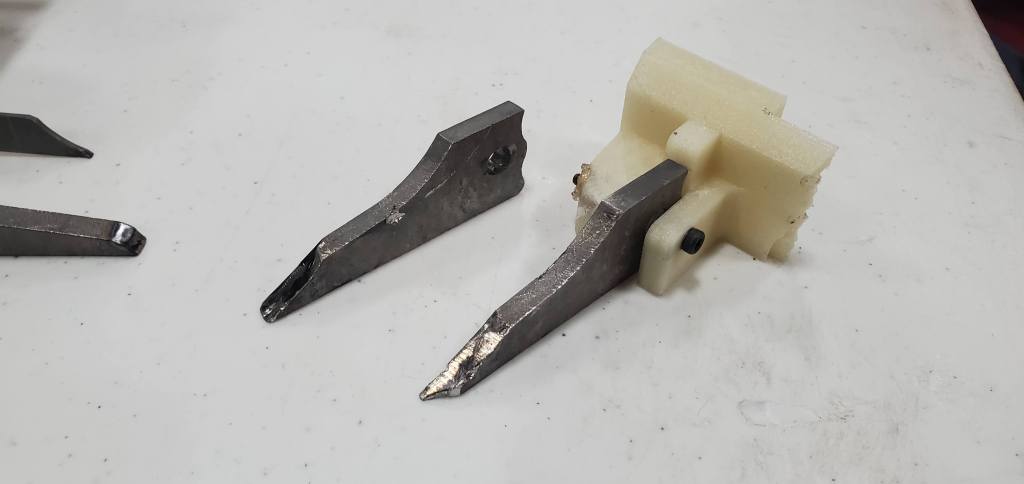
At this point in time it was fairly close on time so it was a quick sprint to the finish with much of the metal parts arrive the day before competition. In the meantime, other options were explored for the robot such as the use of old 1/4″ Grade 5 Titanium forks and more Nylon for the mounting hardware. For the horizontal option, an old wedge from the previous version of the machine was attached to a TPU base and slots into the mounts. Ultimately these changes were important as the final weight of these came out to nearly 3lbs which may remove the possibility to use the steel components in competition anyway. The final touch was to add a little weapon lock into the robot. It doubles as a carrying hook as well! It’s the little things that make it really fun. With Phenomena done, on to the next bot!
Cattywampus
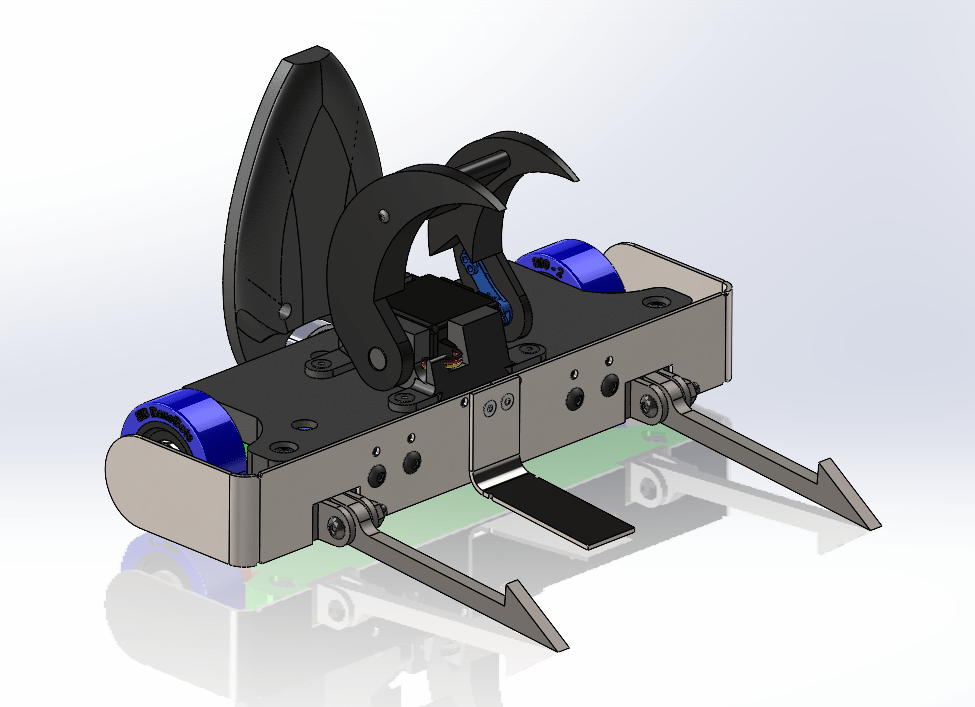
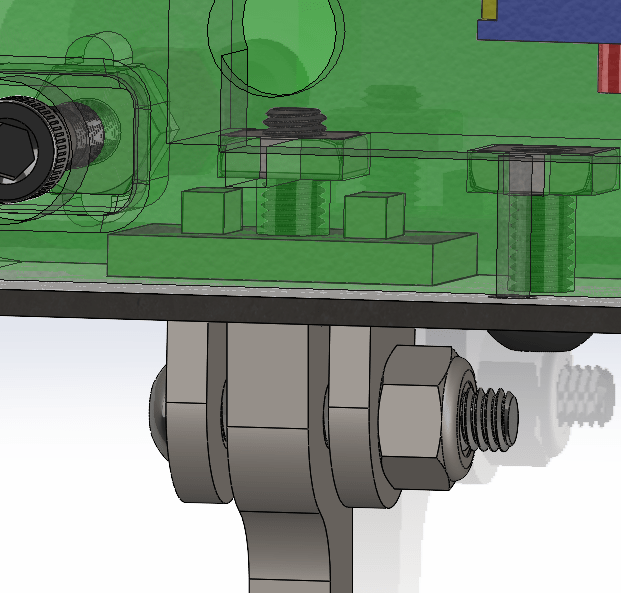
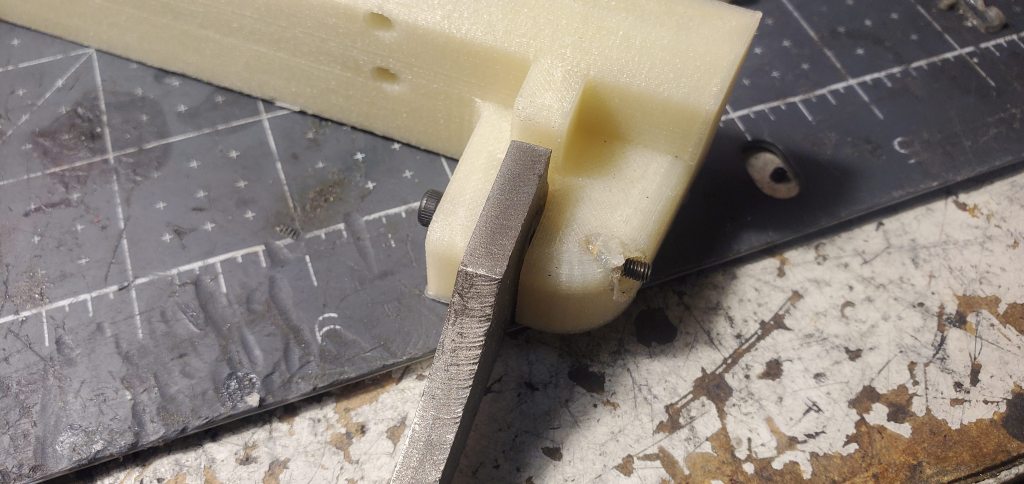
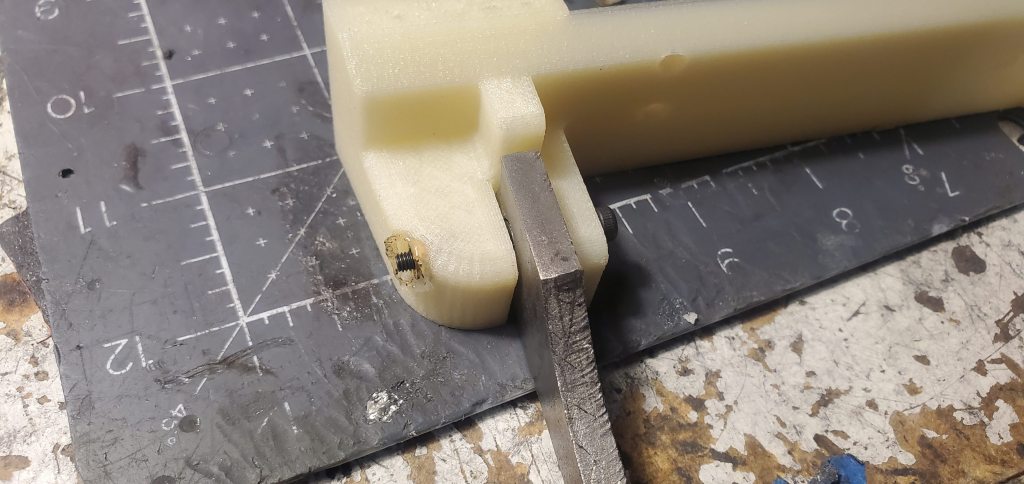
In contrast, Cattywampus came to this competition with relatively little changes. The shape of the robot was very effective at the previous event with the sole exception of the forks mounting being susceptible to bending. The TPU chassis’ flexibility was incredibly helpful in absorbing energy and allowing the robot to defend the tail well. The new setup removes the mounting geometry from the TPU and instead insets a small welded insert that’s constrained by a 10-32 screw and square nut. The extra tabs in the fork mounts themselves also key into the TPU to resist twisting.

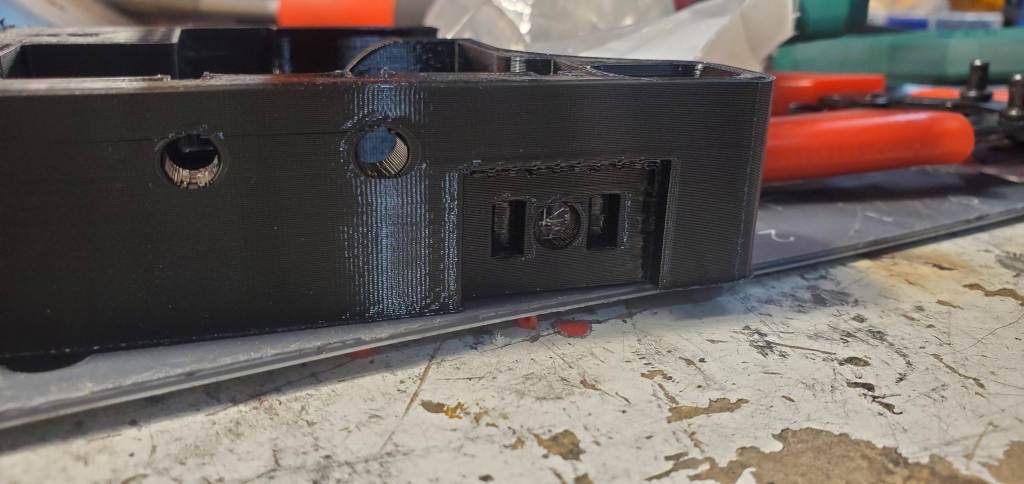
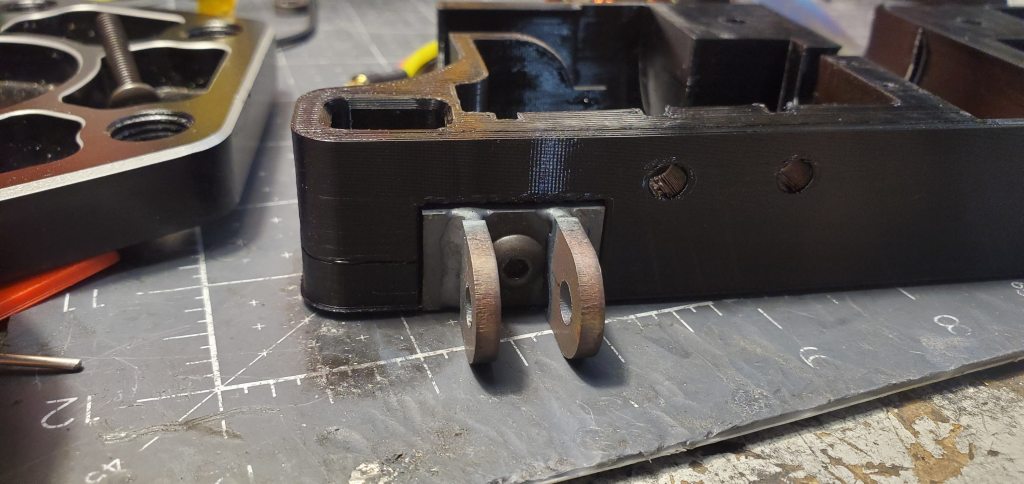
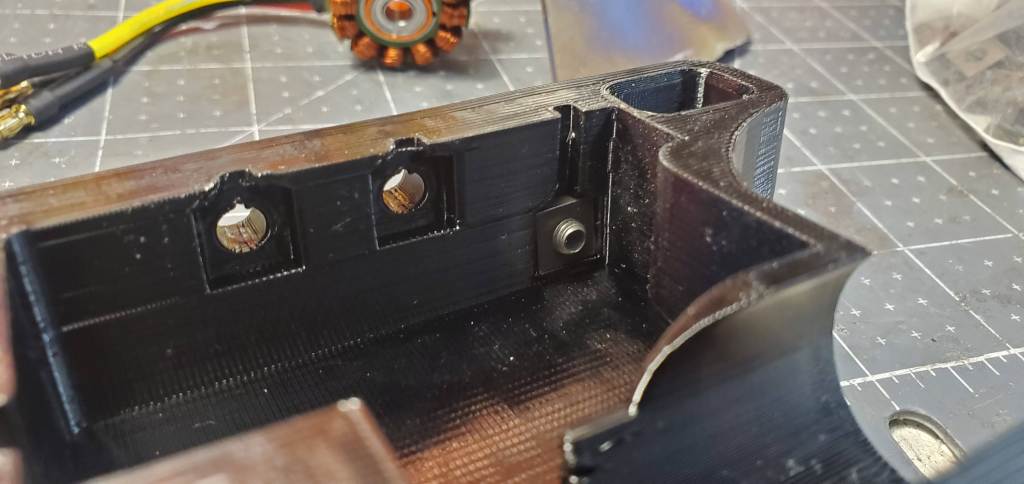
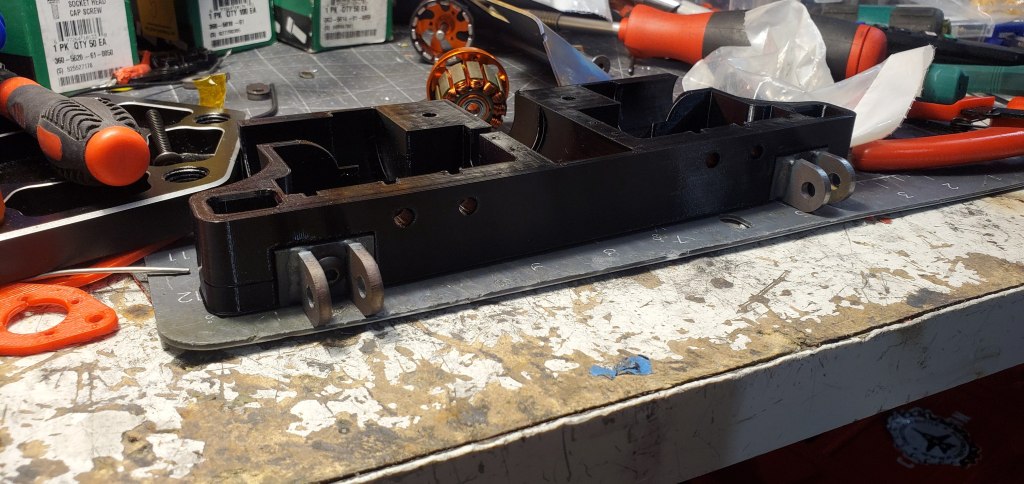
Remarkably not much happened to the robot before this event, mostly replacing the dead drive motor on one side and charging up the battery. The designed improvement didn’t arrive until the day before so the mounts were welded and attached but the chassis wasn’t replaced. The components could swap in fairly easily so I wasn’t worried.
Ferocious Mk.6
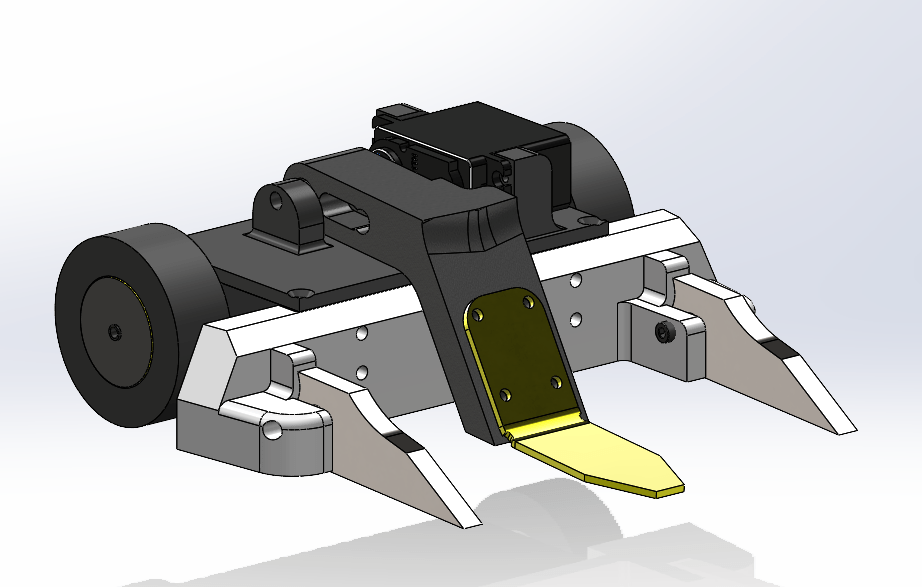
Ferocious was registered to the event as a backup in case Phenomena was unable to compete. Since there were many moving parts to get things together it was an easy option to get a guaranteed second entry into competition to minimize risk of spending more time travelling to the event than competing. It was also a chance to try out the more simplified lifting servo option and another test of the glass-filled Nylon material.
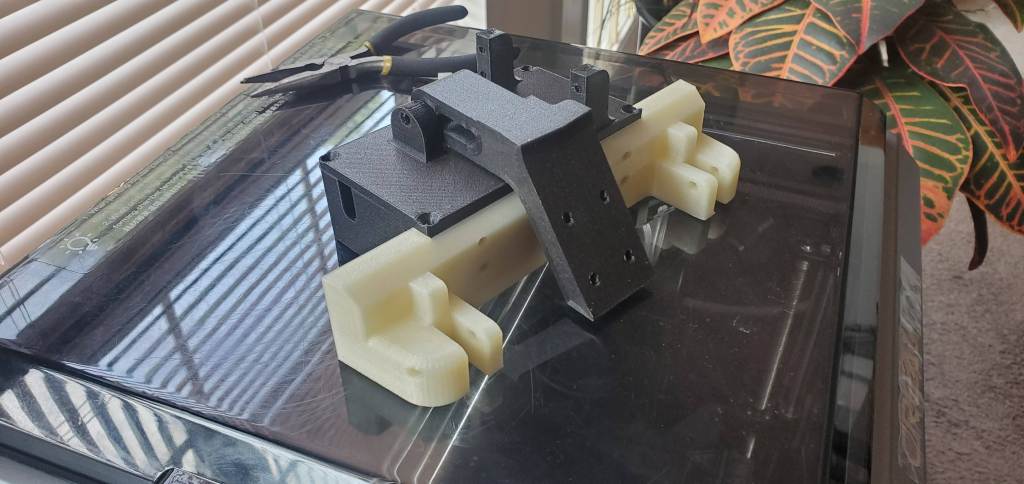
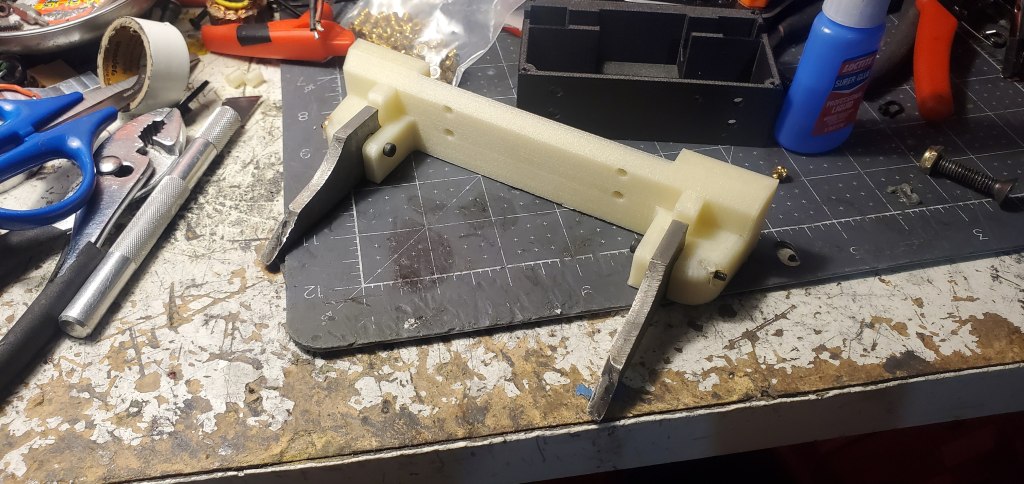
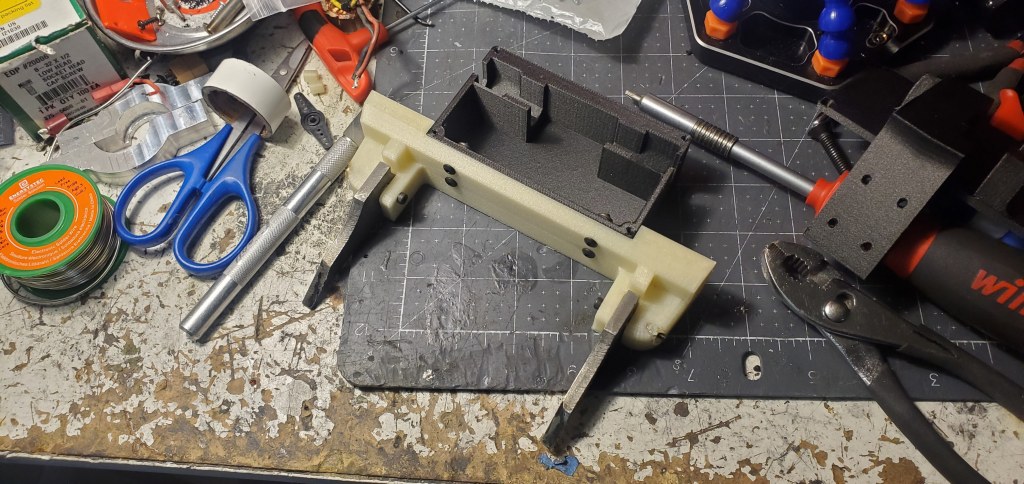
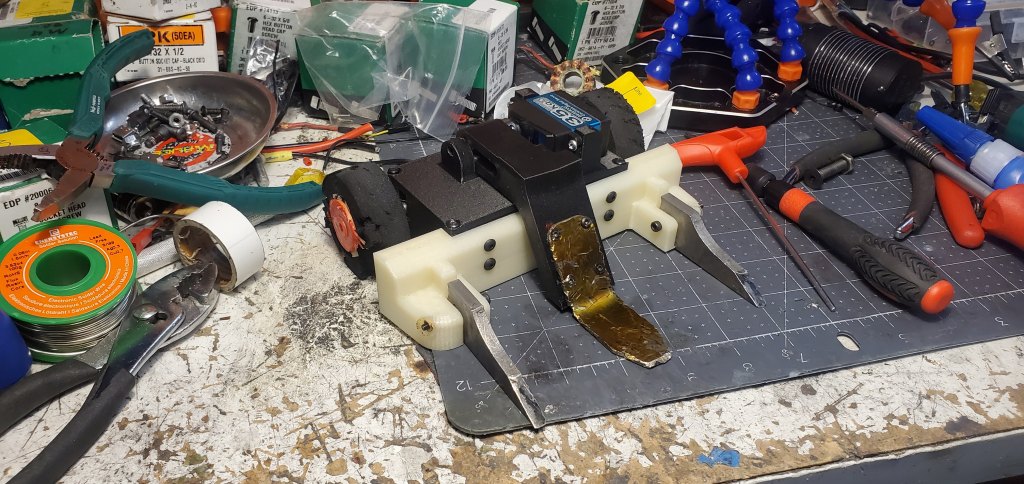
The build of Ferocious was very fast. In about ~4 hrs all the parts were printed and in another 2 the bot was fully assembled. After having worked on this machine for a couple years it was pretty simple to transplant the internals.
Competition
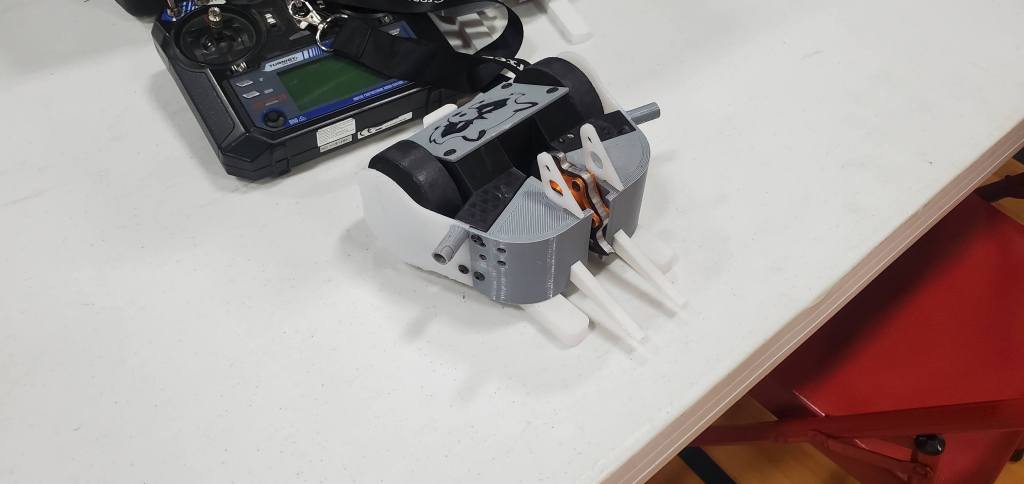
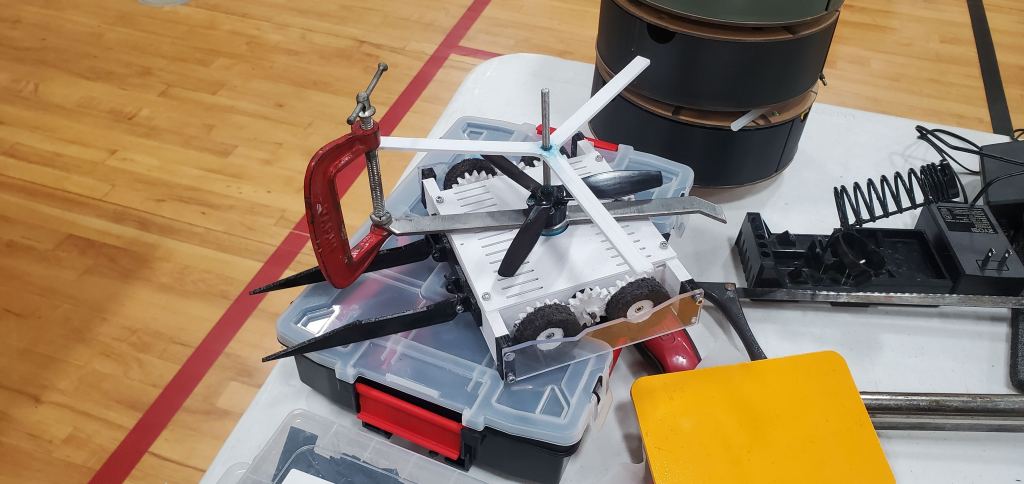
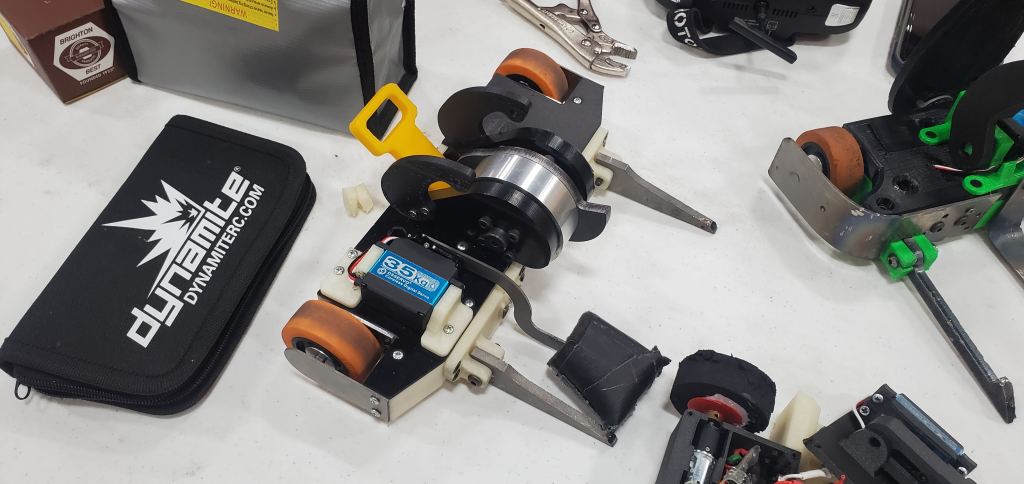
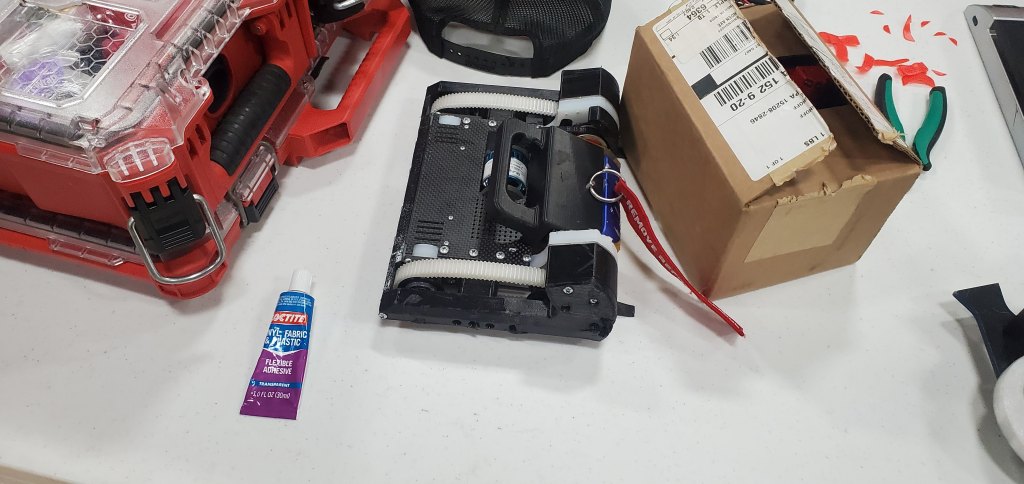
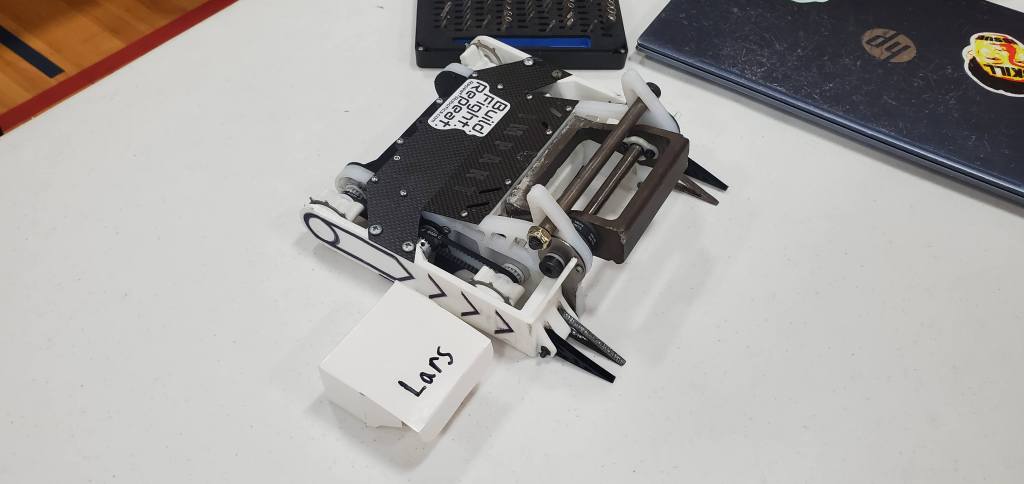
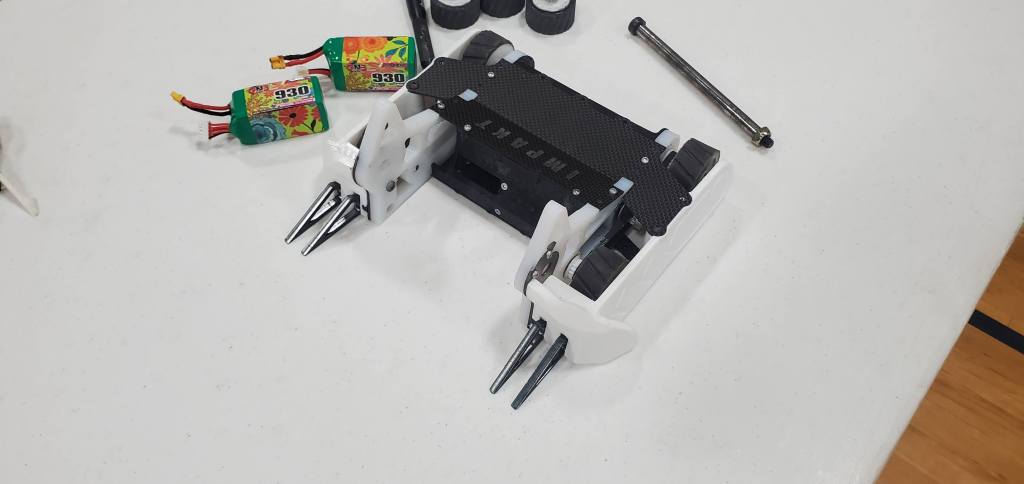
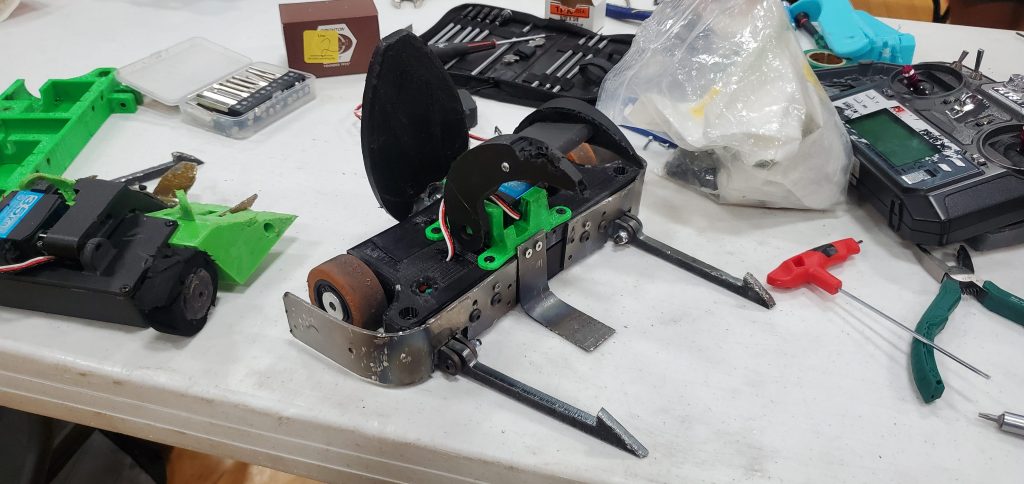
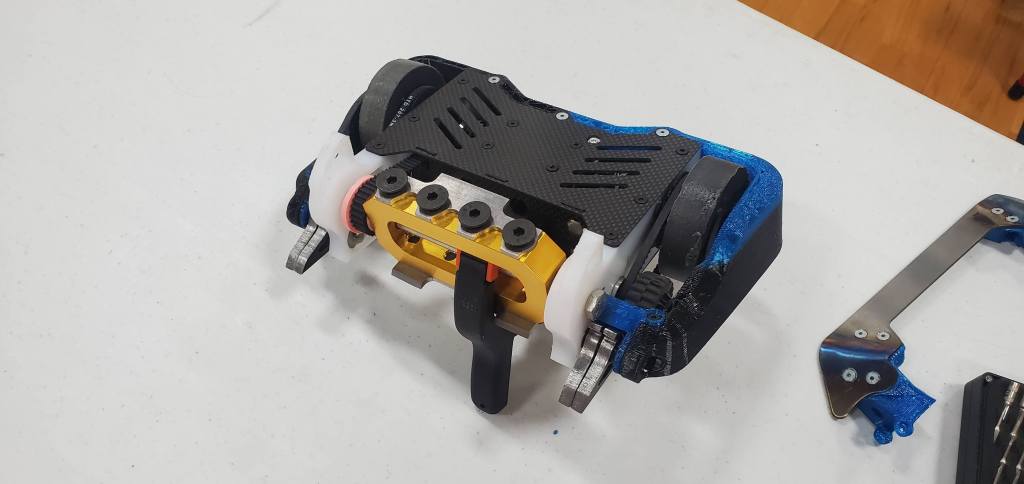
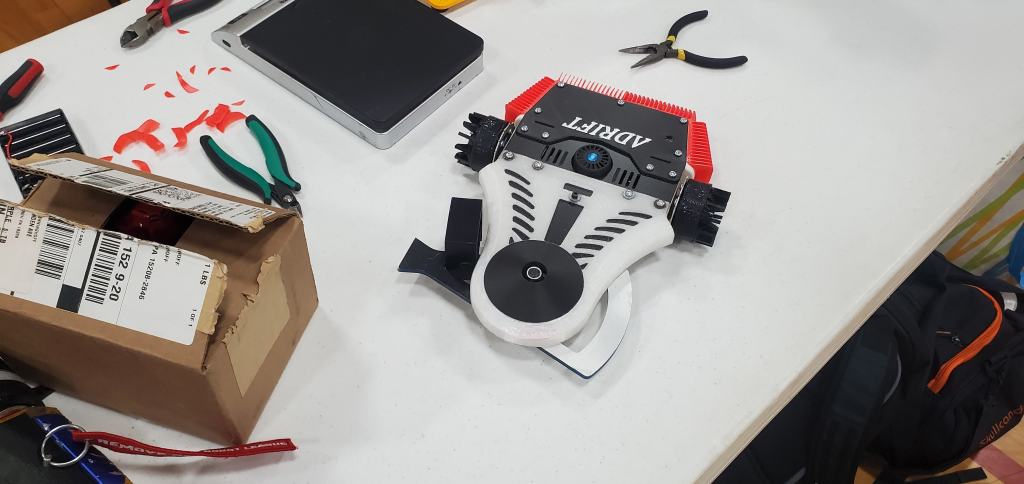
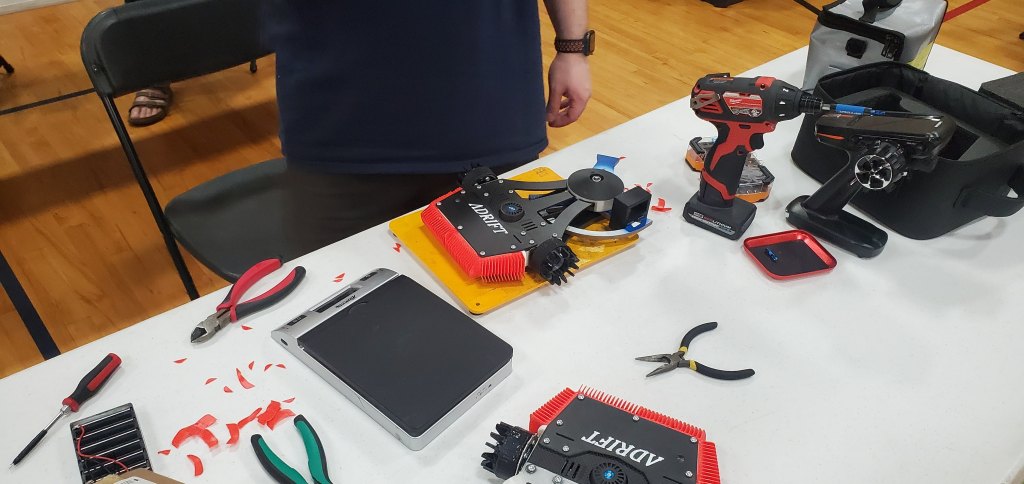
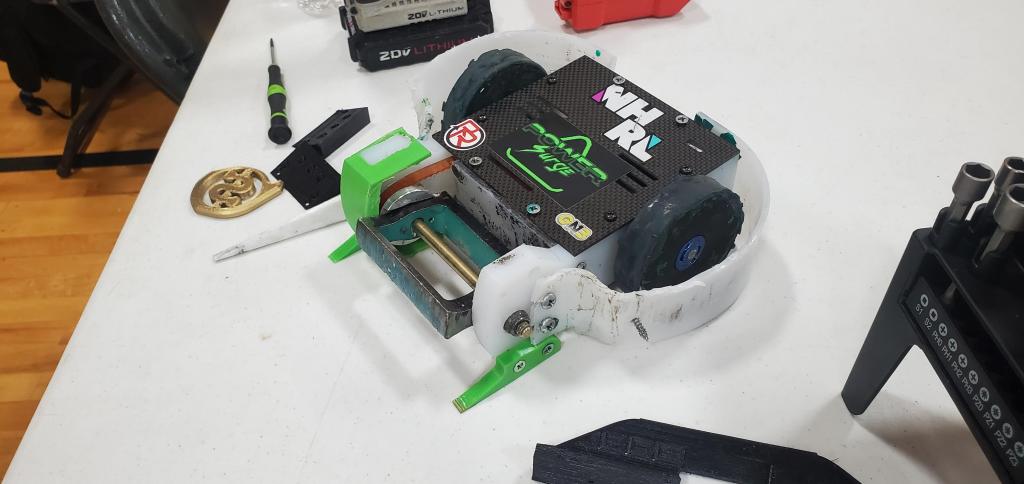
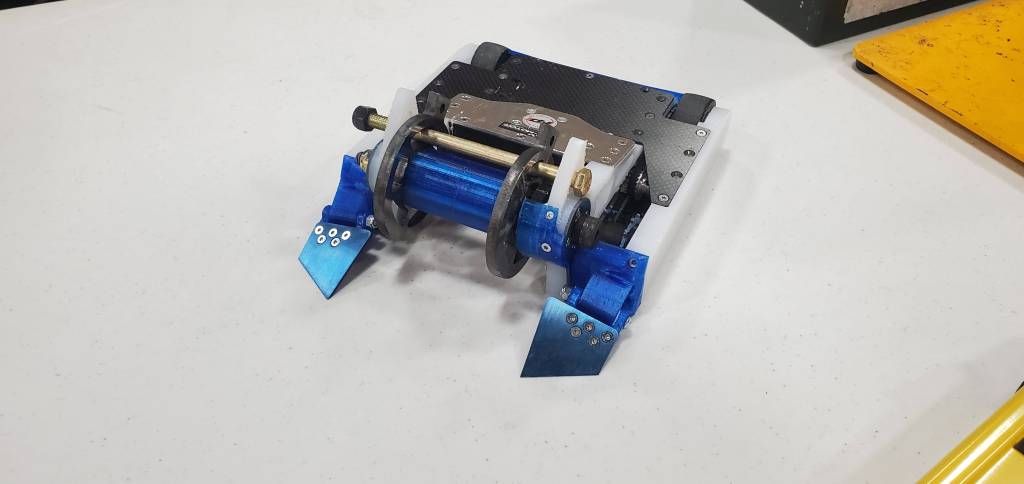
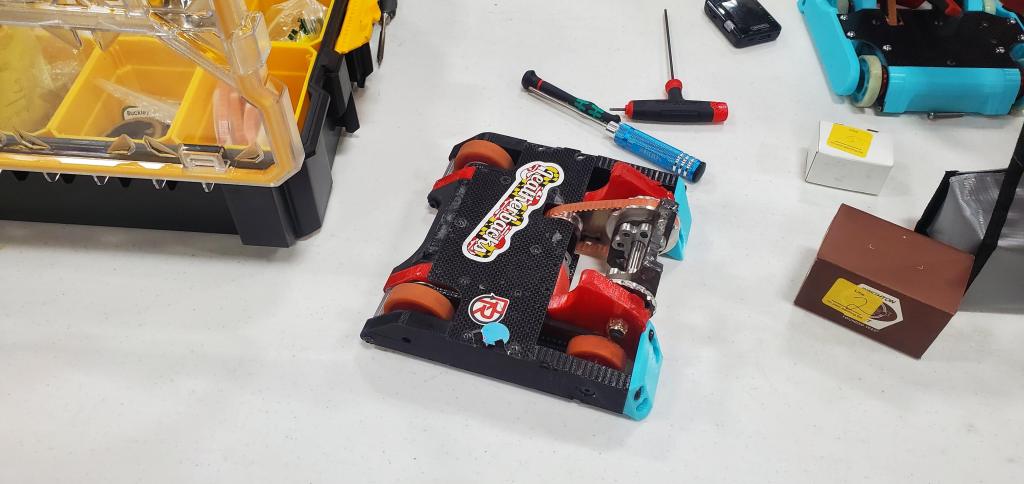
Though far from the total number of competitors, here’s a quick look at the field. Its a range of really solid range of primarily verts with a few other notable machines in the field that aren’t pictured, and a Cattywampus.
For SWORD, the big thing is the beetleweights do a 3-way battle for 3 rounds then the top machines are seeded in a single elimination bracket. The seeding for this is determined by order of knockout (i.e. if you die first you get 1 point, next 2, then 3) and from that the higher level of 1st and 2nd is determined by judge’s decision or knockout. Knockouts also earn an extra point. In theory, a robot could go as low as 1 point for losing first, then as high as 5 points for winning with 3 points and 2 knockouts. This method guarantees at least 3 fights for each machine, sort of like a modified version of Battlebots Fight Night.
Ferocious
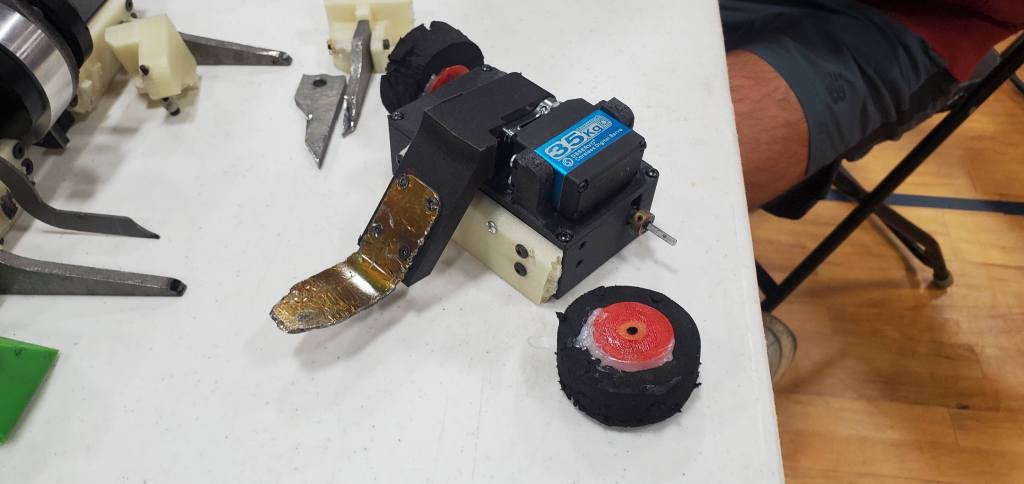
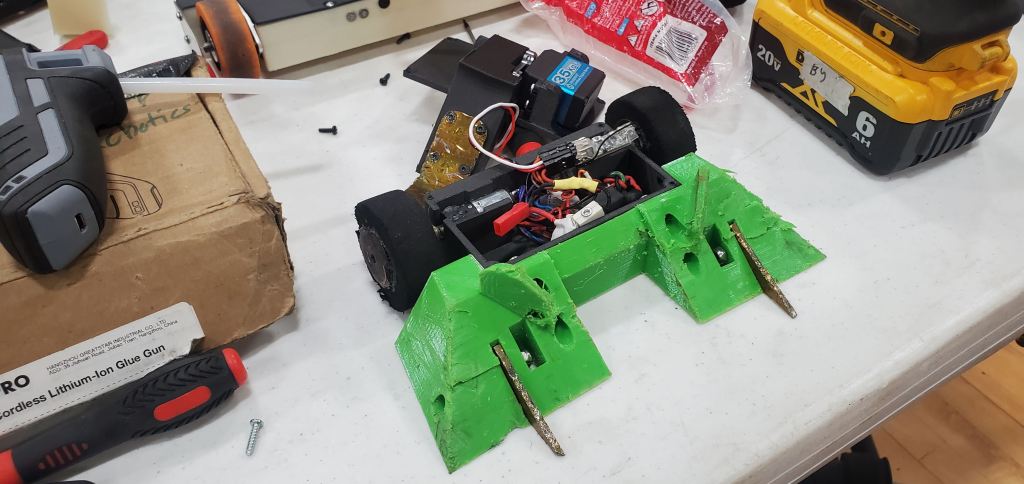
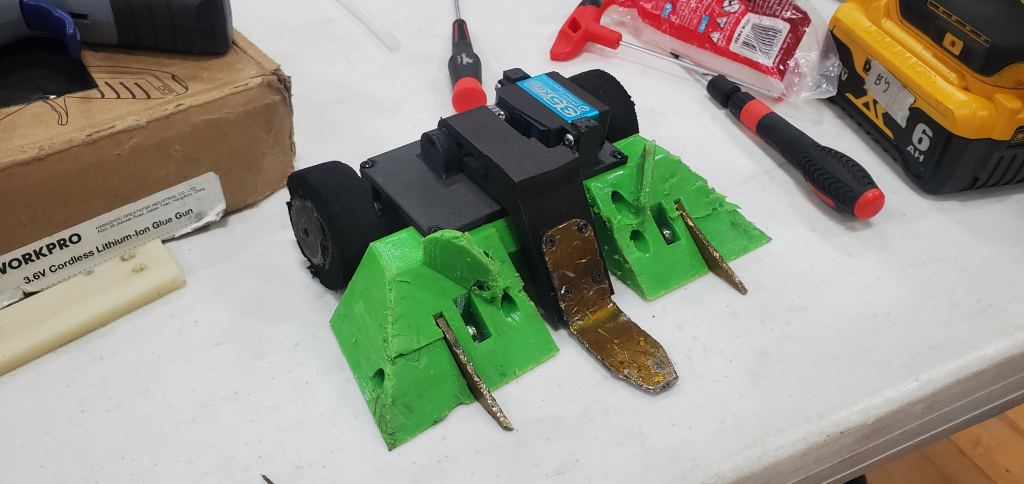
Overall, Ferocious had a very uneventful day. The robot did very well in its first match against Flatline through carefully controlling it, but in one glancing shot within the last 10 seconds of the fight, Flatline shattered the glass-filled Nylon and managed to remove the wheel. Ultimately Ferocious won the battle, but in less than convincing manner. Luckily I brought the old TPU front attachment and replaced the Nylon. The second fight was against a vertical spinner and it was a little better as the robot wasn’t explicitly damaged, but the Titanium flipper tongue had been bent and the servo arm was stripped off the servo. The robot was ultimately stuck on its face and counted out. The third fight was even less eventful with the machine getting stuck in the wall and the servo bring sniped. It was a less than eventful day for the machine, but the lifting arm was not damaged so it did give some learning.
Phenomena
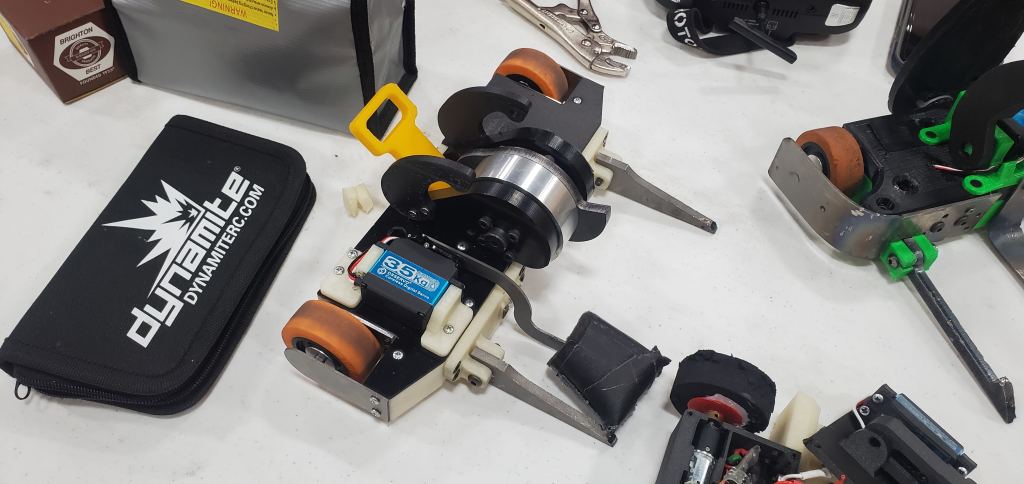
Phenomena had a short but very exciting day. It only had two fights, but in each fight its strengths and weaknesses were both fully on display.
In its first fight, the weapon did an excellent job delivering huge hits and the wide base did a fair job minimizing the gyro. Despite the effect, the hubmotor was only at 50-60% so it was definitely powerful. The downside is that the voltage sag from it seems to be high as the drive moves much slower than Cattywampus despite the two sharing the same voltage, drive motors, and wheels. The final element to observe was the combo of hoops and hubmotor. Though there is certainly an asterisk because of the power density of beetleweights, there were multiple moments where Phenomena was in a position similar to Vorion/Phenomenon and it had no issues reorienting itself either from a weapon impact or passively rolling. This was the exact thing I was hoping for and in time I’d like to test this more on the both the small and bigger ones.
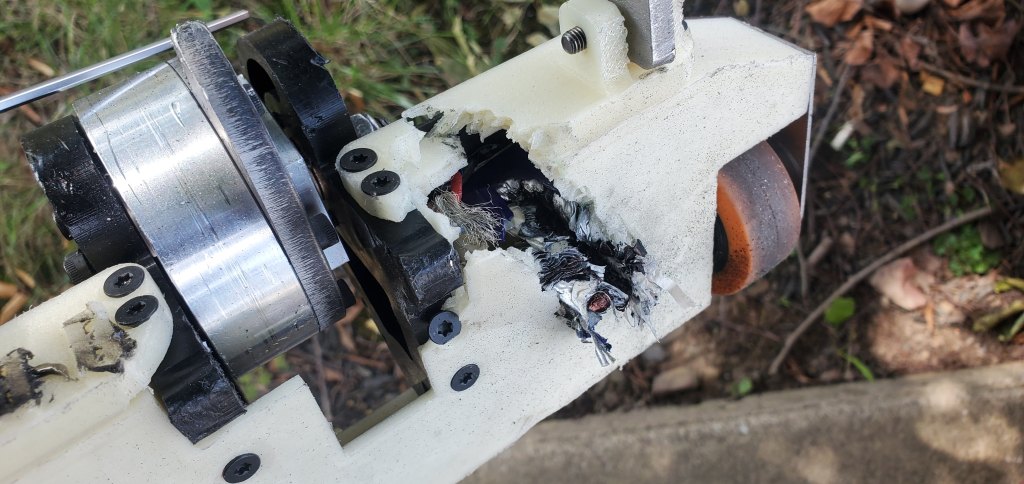
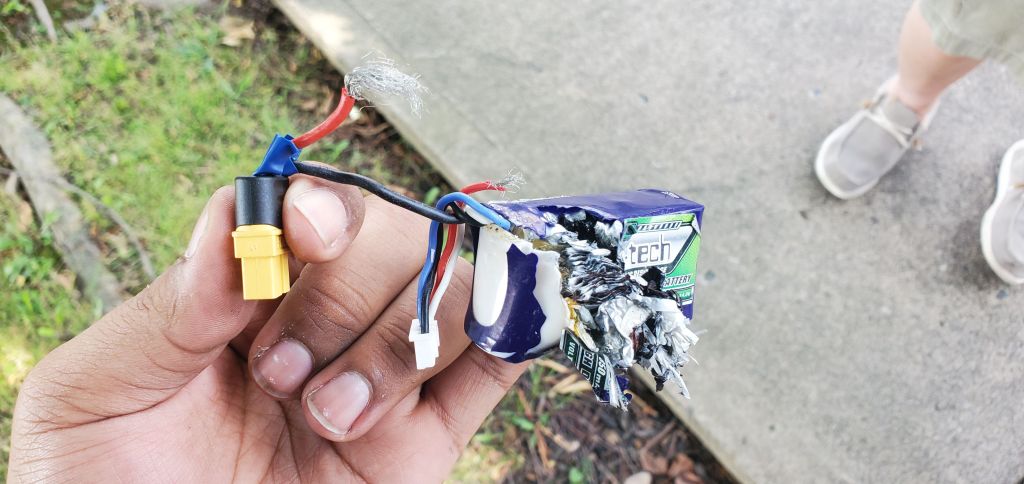
The second fight was the opposite where the weakness of the robot was on display. Besides the drive hub wobbling loose (the downside of running multiple machines!) the Nylon chassis clearly reached its limit. Both Drumder Child and Phenomena were absolutely ruined by Honeycomb, but the difference between the two was the level of failure. Both were struck but the amount of material ruined on Phenomena proved it had little armor anyway. By going through not just the baseplate but through the front wall and the fork guard means that event with nearly 1/2″ of material it is just too brittle to handle direct shot. This is backed up by the explosion of Ferocious’ front armor earlier in the day. This also contrasts with Drumder Child which, despite being thoroughly damaged, didn’t see the weapon go quite as deep through the Carbon Fiber top plate. Whether 2mm or 3mm the issue is ultimately the same. Fortunately the battery was struck so quickly that the lithium in the battery turned into ribbons, essentially destroying them before they had a chance to react and go into flames. The lithium armor it provided did spare the rest of the chassis, no other components were damaged so the next version could lift parts directly from this. All in all, a good stepping stone for the future.
Cattywampus
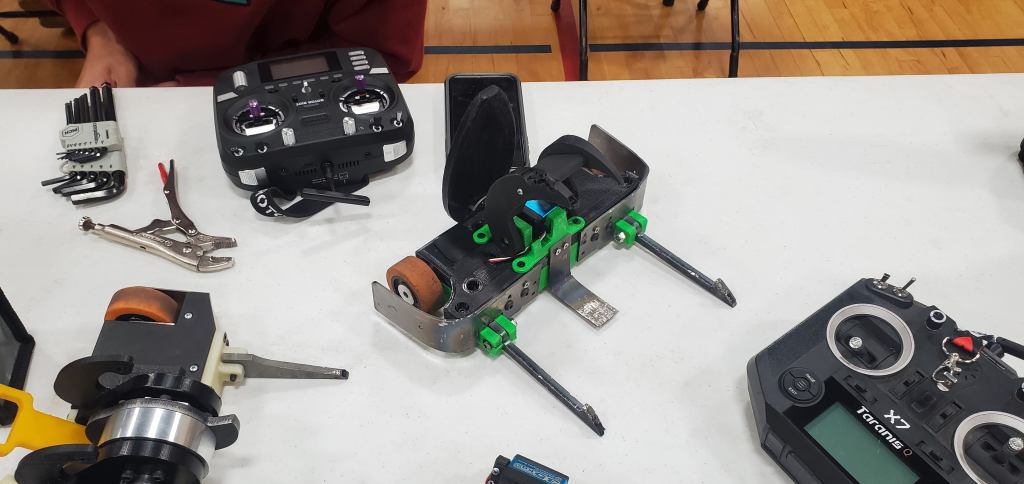
Cattywampus had a good time, though not as successful as its time at GSCRL. Ultimately Cattywampus is a glass canon and in 3-way battle with a very obvious weak point in its rear it was very much a standard control bot instead of the crazy flipper it historically has been. It is far less exciting, but it is the real world.
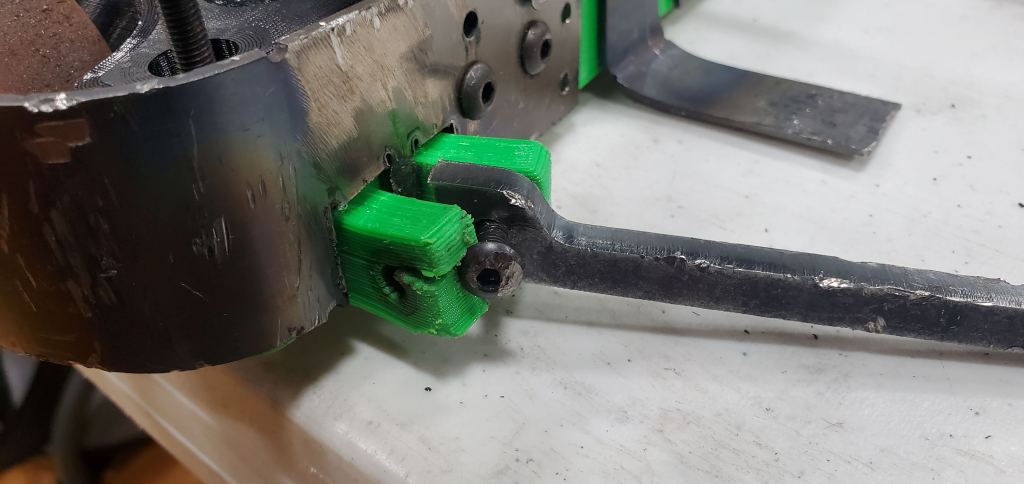
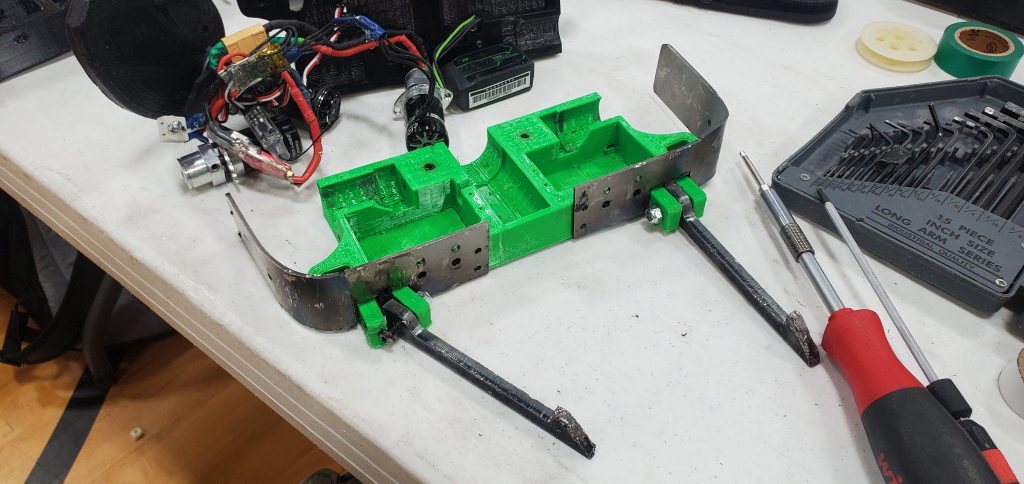
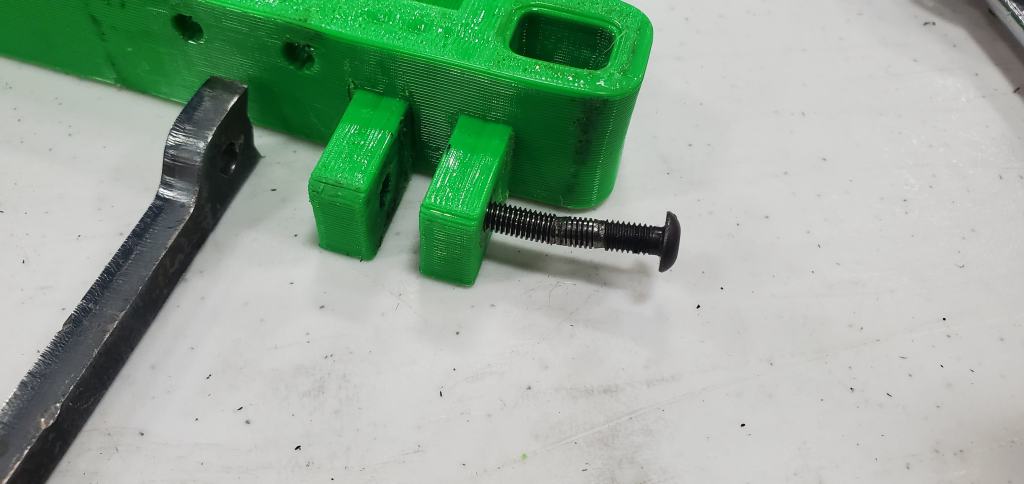
After its first fight with Pinevictus and Power Surge III, the weakness of the all TPU mounting for the forks showed itself; the layer lines failed and all the side shots on the forks are constantly forcing a high pressure on the relatively small area. To the TPU body’s credit, it did an excellent job as even the 10-32 screw on one side bent after all the beatings it took. Ultimately though, it was time to retire this chassis and try out the new piece with the integrated steel mounts. After a bit of time through lunch, all the parts were evacuated and moved over to the new one.
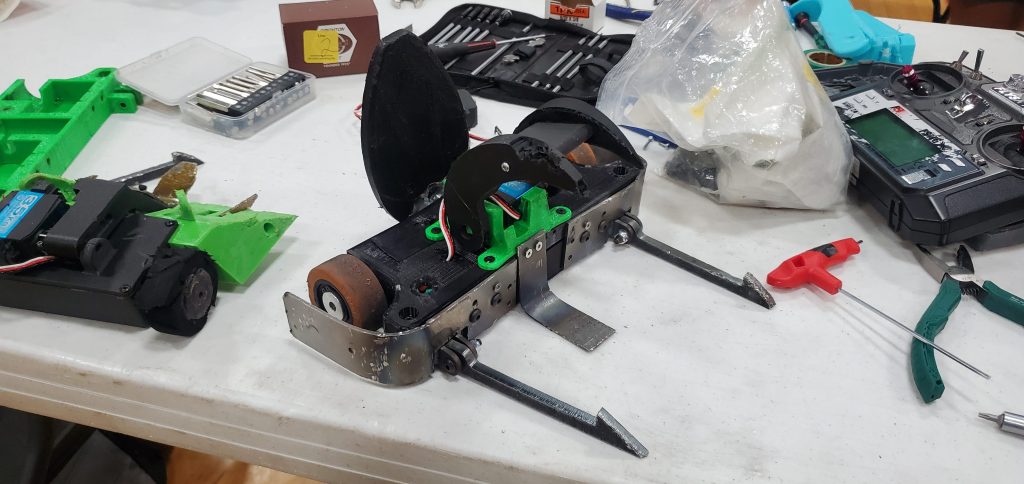
The robot looks the same, but the tiny change in fork mounting came at the perfect time. In its second fight against Pinevictus (again) and BoomBox, Alex drove Pine excellently to get at the tail but despite all the attacks, the forks had no issues. The steel inserts transmitted the force to the TPU which absorbed all the energy without flaw.
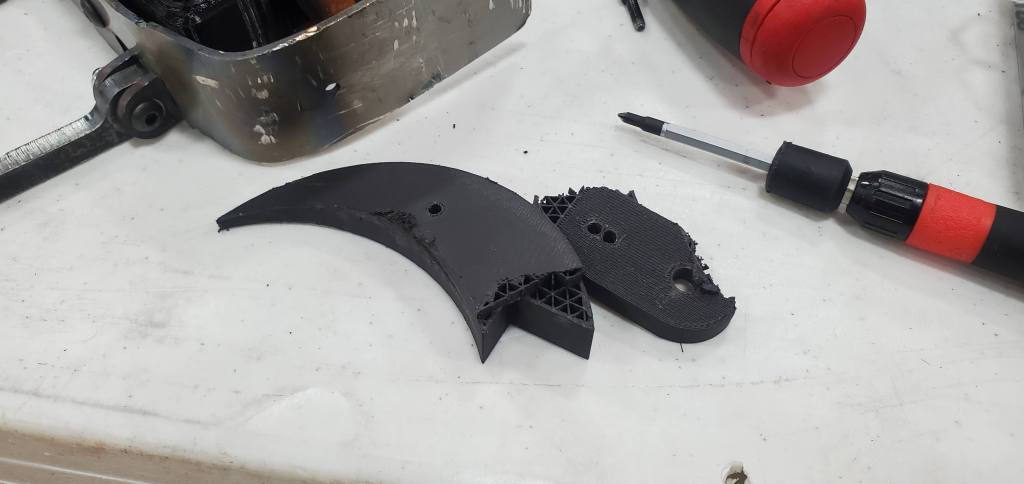
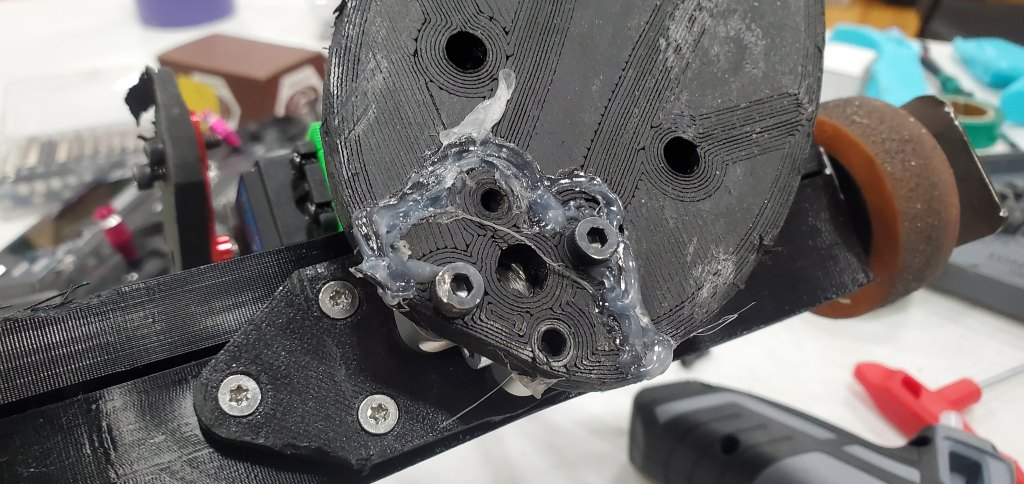
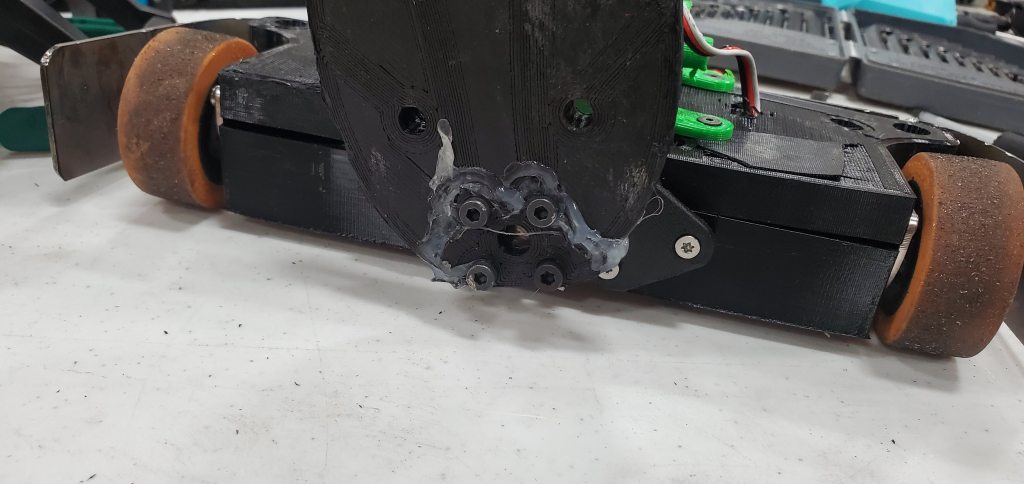
Half of the head was replaced and the tailed was glued together in the event that Catty was able to make it into the bracket. Its third fight was uneventful as the switch case was damaged from the previous fight and wiggled loose during the fight. Ultimately it wasn’t able to get into the tournament but the lessons were learned.
Looking Forward
Ultimately the robots did not win the tournament, but the lessons were achieved. Each bot hit its goal:
- Ferocious’ lifting arm worked ✅
- Phenomena’s hubmotor worked ✅
- Phenomena’s hoops worked ✅
- Cattywampus’ TPU and AR500 chassis mix worked ✅
However there are key changes that need to be made:
- Switch Ferocious’ fork mount➡️ TPU or UHMW
- Switch Cattywampus’ tail ➡️UHMW
- Switch Phenomena’s chassis➡️TPU or UHMW
Time will tell when these guys compete again, but check back again to see what other robot things are on the way!


 Bone Dead Robotics
Leave a comment